- This topic is empty.
-
AuthorPosts
-
27/11/2026 at 13:53 #153271
In overhead power transmission projects, conductor stringing requires careful coordination between equipment, operators and site conditions. Even minor problems with tension control or equipment compatibility can affect installation accuracy, increase conductor wear and create delays. For contractors handling long-distance transmission lines, selecting suitable stringing machinery is essential to maintaining productivity and protecting valuable materials.
Working with a dependable cable tensioning equipment manufacturer is therefore about more than obtaining sufficient pulling or tensioning capacity. The equipment must support controlled conductor movement, adapt to different installation requirements and work reliably as part of a complete stringing system.
1. Maintaining Consistent Tension Throughout Conductor Installation
Conductor tension can change during installation due to differences in span length, terrain, elevation and operating conditions. Poor tension management may result in excessive sag, contact with surrounding obstacles or unnecessary mechanical stress on the conductor.
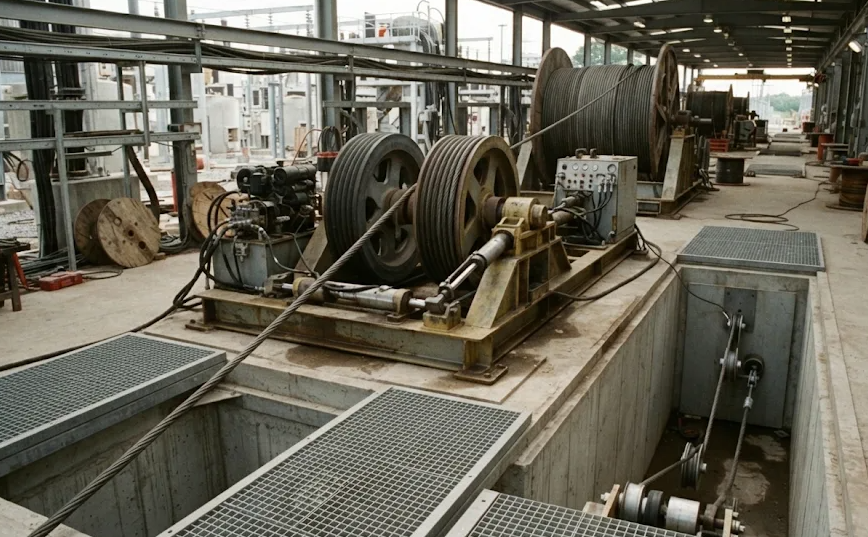
Hydraulic cable tensioners help operators control conductor movement and maintain the required tension during stringing. When comparing different models, contractors should consider continuous working capacity, maximum tension, braking performance and the stability of the hydraulic system.
The number of conductors being installed is another important factor. Single, twin-bundle and four-bundle stringing operations may require different equipment configurations. Donghuan Power Technology offers hydraulic tensioner models for different conductor installation requirements, including two-bundle and four-bundle applications. Matching the equipment configuration to the project helps avoid capacity limitations and unnecessary adjustments during construction.
2. Reducing Conductor Wear Through Proper Bullwheel Design
Protecting conductor surfaces is a major concern during stringing. Scratches, deformation and abrasion can compromise conductor condition and lead to additional inspection or corrective work.
The tensioner's bullwheel is one of the components that directly influences conductor contact. Its diameter, groove dimensions and surface material should be compatible with the conductor being installed. MC nylon-lined bullwheels offer a relatively smooth contact surface and can help reduce friction and surface abrasion when correctly matched to the application.
However, conductor protection depends on more than the tensioner itself. Stringing blocks, cable rollers and other accessories must also be selected according to conductor diameter, working load and installation conditions. An unsuitable roller or poorly aligned support can introduce additional friction even when the main tensioning machine is correctly specified.
3. Building a Compatible Stringing Equipment System
A conductor stringing operation involves several interconnected machines and accessories. Hydraulic pullers provide traction for moving pilot ropes or conductors, while hydraulic tensioners regulate resistance during installation. Reel stands support controlled conductor payout, and stringing blocks guide conductors along the transmission route.
Anti-twist steel wire ropes are also important in suitable pulling arrangements, helping maintain controlled rope behavior during operations when used with compatible equipment.
Purchasing these components separately without checking their specifications can create problems. Differences in working capacity, rope dimensions, hydraulic connections and equipment interfaces may complicate site preparation or delay commissioning.
Donghuan Power Technology supplies a range of power line construction equipment, including hydraulic tensioners, hydraulic pullers, winch pullers, conductor stringing blocks, reel stands and anti-twist steel wire ropes. Having access to different equipment categories can help contractors plan a more coordinated stringing arrangement.
Before procurement, project teams should confirm conductor type, installation distance, required tension, pulling capacity and accessory specifications. This makes it easier to identify potential compatibility issues before equipment reaches the job site.
4. Prioritizing Operational Safety and Equipment Reliability
Conductor stringing involves substantial mechanical forces, heavy equipment and changing site conditions. Uncontrolled tension, equipment movement or component failure can create serious risks for operators and nearby personnel.
When evaluating hydraulic tensioning equipment, buyers should examine braking arrangements, control systems, pressure monitoring and overload protection where applicable. These features should be assessed against the actual operating requirements rather than assumed to provide protection under every condition.
Routine inspection is equally important. Hydraulic hoses, fittings, braking components, bullwheel surfaces and other critical parts should be checked before operation and maintained according to manufacturer recommendations.
Safe equipment operation also requires proper anchoring, stable ground conditions, trained personnel and clearly defined working zones. Reliable machinery supports safe construction, but it cannot replace appropriate site management and operating procedures.
5. Key Considerations When Sourcing Cable Tensioning Equipment
Choosing a supplier becomes easier when contractors establish clear technical requirements before requesting quotations. Important factors include:
-
Conductor details: Conductor type, diameter, weight and bundle configuration.
-
Tension requirements: Required working tension, maximum tension and expected operating duration.
-
Site conditions: Terrain, access restrictions, installation distance and transportation arrangements.
-
System compatibility: Matching tensioners with pullers, stringing blocks, reel stands and ropes.
-
After-sales support: Technical documentation, operating guidance, spare parts and maintenance information.
Evaluating these factors provides a more realistic basis for comparing manufacturers. A machine with a higher rated capacity is not necessarily the best choice if its configuration does not match the project.
6. Supporting More Efficient Stringing Operations with Donghuan Power Technology
Successful conductor installation relies on the coordination of tension control, pulling performance, conductor protection and supporting accessories. Contractors need equipment that works as part of a complete system rather than isolated machines selected solely by capacity.
Donghuan Power Technology offers hydraulic tensioners, hydraulic pullers, winch pullers, stringing blocks, reel stands and related power line construction equipment for different transmission line applications. Its product range gives contractors and equipment distributors options when planning equipment configurations for different conductor stringing requirements.
By evaluating project conditions and technical specifications before purchasing, buyers can reduce equipment mismatch, improve site coordination and avoid unnecessary installation interruptions.
Ultimately, selecting a reliable cable tensioning equipment manufacturer is an important part of maintaining controlled, efficient and dependable conductor stringing operations. The right equipment combination helps protect conductors, support construction quality and keep power transmission projects moving forward.
https://www.donghuanpower.com/choosing-the-right-cable-tensioning-equipment-manufacturer.html
http://www.donghuanpower.com
Ningbo Donghuan Power Technology Co., Ltd. -
-
AuthorPosts

- You must be logged in to reply to this topic.