- This topic is empty.
-
AuthorPosts
-
27/11/2026 at 11:15 #153268
As vaccine research continues to target increasingly complex infectious diseases, the development of effective and stable adjuvant systems has become an important part of modern immunological research. Beyond improving antigen-specific immune responses, vaccine developers must also consider formulation stability, safety, manufacturing consistency, and the ability to adapt adjuvant compositions to different antigens.
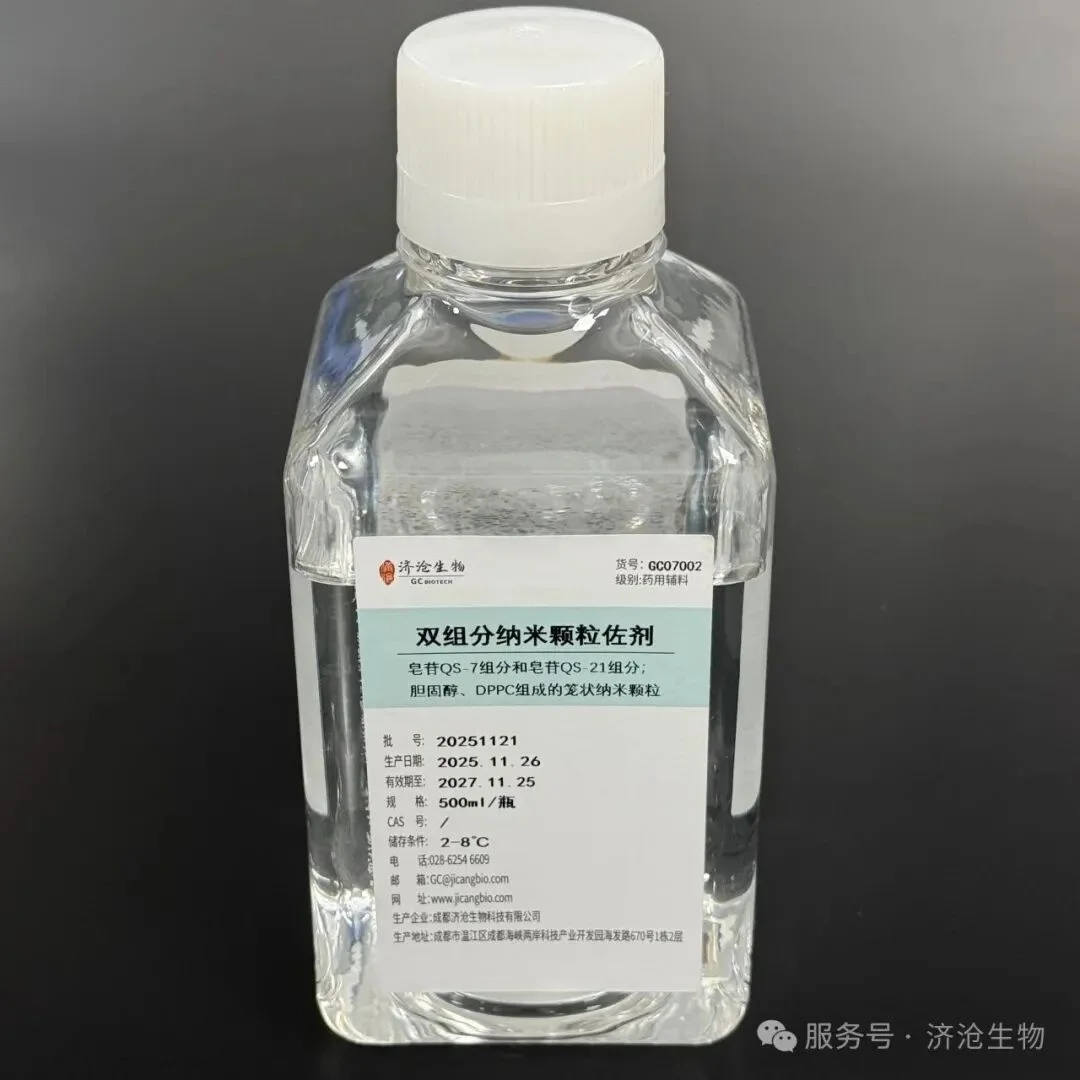
Against this background, GC Biotech has achieved an important development milestone by completing pilot-scale production of its next-generation 40nm saponin-based two-component nanoparticle adjuvant. The platform incorporates purified QS-7 and QS-21 fractions extracted from the Chilean soapbark tree, offering a formulation approach designed to support cellular immunity while addressing some of the challenges associated with conventional saponin-based adjuvants.
1. Combining QS-7 and QS-21 for Balanced Immune Stimulation
QS-7 and QS-21 are saponin components that have attracted considerable attention in vaccine adjuvant research because of their immunostimulatory properties. QS-21 is particularly recognized for its ability to enhance cellular immune responses, including Th1-associated responses and cytotoxic T-cell activity. However, its formulation and tolerability require careful consideration.
QS-7 provides an additional component with different physicochemical and biological characteristics. Combining these two saponins creates an opportunity to investigate their complementary effects and optimize the balance between immune activity and tolerability.
GC Biotech's platform uses phospholipids and cholesterol to assemble the QS-7 and QS-21 components into nanoparticles with a target diameter of approximately 40 nm. This formulation strategy is designed to support particle stability, antigen presentation, and cellular immune activation while reducing hemolytic activity compared with less controlled saponin formulations.
The overall objective is to develop an adjuvant platform that offers vaccine researchers greater control over formulation characteristics and immune response profiles.
2. Key Technical Features of the 40nm Nanoparticle Platform
Several technical considerations distinguish this two-component nanoparticle adjuvant.
Synergistic QS-7/QS-21 Formulation
The combination of QS-7 and QS-21 provides a basis for exploring complementary saponin activity. By adjusting their relative proportions, researchers can investigate different formulation profiles and evaluate their effects on immune responses and tolerability.
Controlled Nanoparticle Architecture
The use of phospholipids and cholesterol supports the self-assembly of the saponin components into a nanoparticle structure. The target particle size of 40 nm provides a defined formulation parameter for process development and quality evaluation. Consistent particle characteristics are important for reproducible manufacturing and subsequent formulation studies.
Flexible Formulation Development
Different antigens may require different adjuvant compositions and concentrations. GC Biotech's platform allows the QS-7/QS-21 ratio and component concentrations to be adjusted according to specific research objectives. This flexibility can support the evaluation of candidate formulations for different vaccine applications.
Progress Toward Scalable Manufacturing
Completing pilot-scale production represents an important step in translating laboratory formulation research into a more scalable manufacturing process. It provides a foundation for further process optimization, batch consistency assessment, analytical characterization, and development activities supporting future clinical-grade production.
3. Potential Applications Across Different Vaccine Research Areas
The 40nm saponin-based nanoparticle adjuvant platform may be relevant to several areas of vaccine development where strong and well-characterized immune responses are required.
For respiratory combination vaccines, including candidates targeting influenza, respiratory syncytial virus (RSV), and human metapneumovirus (hMPV), adjuvant selection is an important consideration when researchers seek to evaluate immune responses against multiple antigens within one formulation.
In the field of antimicrobial resistance (AMR), vaccine development faces challenges associated with complex bacterial pathogens and the need to identify protective immune mechanisms. Flexible adjuvant formulations may provide additional options for investigating antigen-specific immune responses.
The platform may also be explored in research involving chronic and intracellular infectious diseases, including tuberculosis, shingles, and malaria. These areas often require careful evaluation of cellular and humoral immune responses, making adjuvant design an important part of candidate vaccine development.
The suitability of any formulation will depend on antigen characteristics, preclinical data, safety evaluation, and the intended vaccine application.
4. Why Pilot-Scale Production Matters for Vaccine Developers
Moving from laboratory research to larger-scale production can introduce challenges that are not always apparent during early formulation experiments. Changes in mixing conditions, raw material characteristics, process parameters, and manufacturing scale may affect particle size distribution, encapsulation characteristics, stability, and batch reproducibility.
Pilot-scale production helps identify these potential issues before further manufacturing development. It also provides opportunities to refine process controls, establish analytical testing methods, and evaluate the consistency of critical quality attributes.
For vaccine developers, a platform with established pilot-scale manufacturing capability can provide a more practical starting point for sample evaluation and collaborative development. Nevertheless, additional process validation, quality studies, and regulatory development remain necessary before clinical-grade manufacturing.
5. GC Biotech: Supporting Collaborative Adjuvant Development
GC Biotech is developing its saponin-based nanoparticle adjuvant platform to support research teams working on next-generation vaccines. With the successful completion of pilot-scale production of its 40nm QS-7/QS-21 two-component formulation, the company is further advancing its capabilities in adjuvant formulation and manufacturing development.
GC Biotech welcomes collaboration with vaccine developers, biotechnology companies, academic institutions, and research organizations worldwide. Potential cooperation models include joint development projects, sample evaluation, and customized formulation design.
By combining formulation flexibility with manufacturing process development, GC Biotech aims to support researchers in exploring new adjuvant strategies for infectious diseases and other vaccine research applications.
Conclusion
The development of effective vaccine adjuvants requires a balance between immunostimulatory performance, formulation stability, safety, and manufacturing feasibility. GC Biotech's 40nm saponin-based two-component nanoparticle platform, incorporating QS-7 and QS-21 with phospholipids and cholesterol, represents a further step in the development of customizable adjuvant technologies.
With pilot-scale production successfully completed, the platform provides a basis for continued formulation evaluation and collaborative research. As vaccine developers pursue more targeted immune responses and adaptable manufacturing solutions, modular saponin-based nanoparticle technologies may offer valuable opportunities for future vaccine development.
en.jicangbio.com
GC Biotech -
AuthorPosts

- You must be logged in to reply to this topic.