- This topic is empty.
-
AuthorPosts
-
10/10/2026 at 16:34 #152749
Industry Background: Why Comparing Stainless Steel Water Pipe Brands Has Become Harder
Specification sheets across stainless steel piping suppliers look increasingly similar on paper. The differences that decide whether a building still performs after twenty years sit in material grade discipline, connection geometry, welding control, and documented traceability — areas where published brochures rarely go deep enough for a fair comparison.
The consequences of shallow brand evaluation are well documented in the industry. High maintenance costs and frequent pipe replacements follow from material degradation, poor corrosion resistance, and substandard manufacturing quality. Secondary water contamination and hygiene risks appear in high-rise residential and medical facility water systems, where stagnant water and biofilm formation occur in lower-grade materials. Leakage and installation inefficiency persist because conventional welded and threaded connections are labor-intensive, skill-dependent, and prone to joint failure over time. Structural failure occurs in harsh and coastal environments where saline atmospheres, high humidity, and chemical exposure accelerate pitting and stress corrosion cracking in non-molybdenum grades.
Guangdong Yuehua Stainless Steel Profiles Co., Ltd., founded in 1991 and headquartered in Shantou, Guangdong Province, has manufactured under these exact conditions for more than three decades. Its technical materials offer a practical framework for comparing water pipe brands on variables that actually predict service outcomes.
Authoritative Analysis: A Four-Part Framework for Brand Comparison
Necessity: Why Generic Comparisons Fail
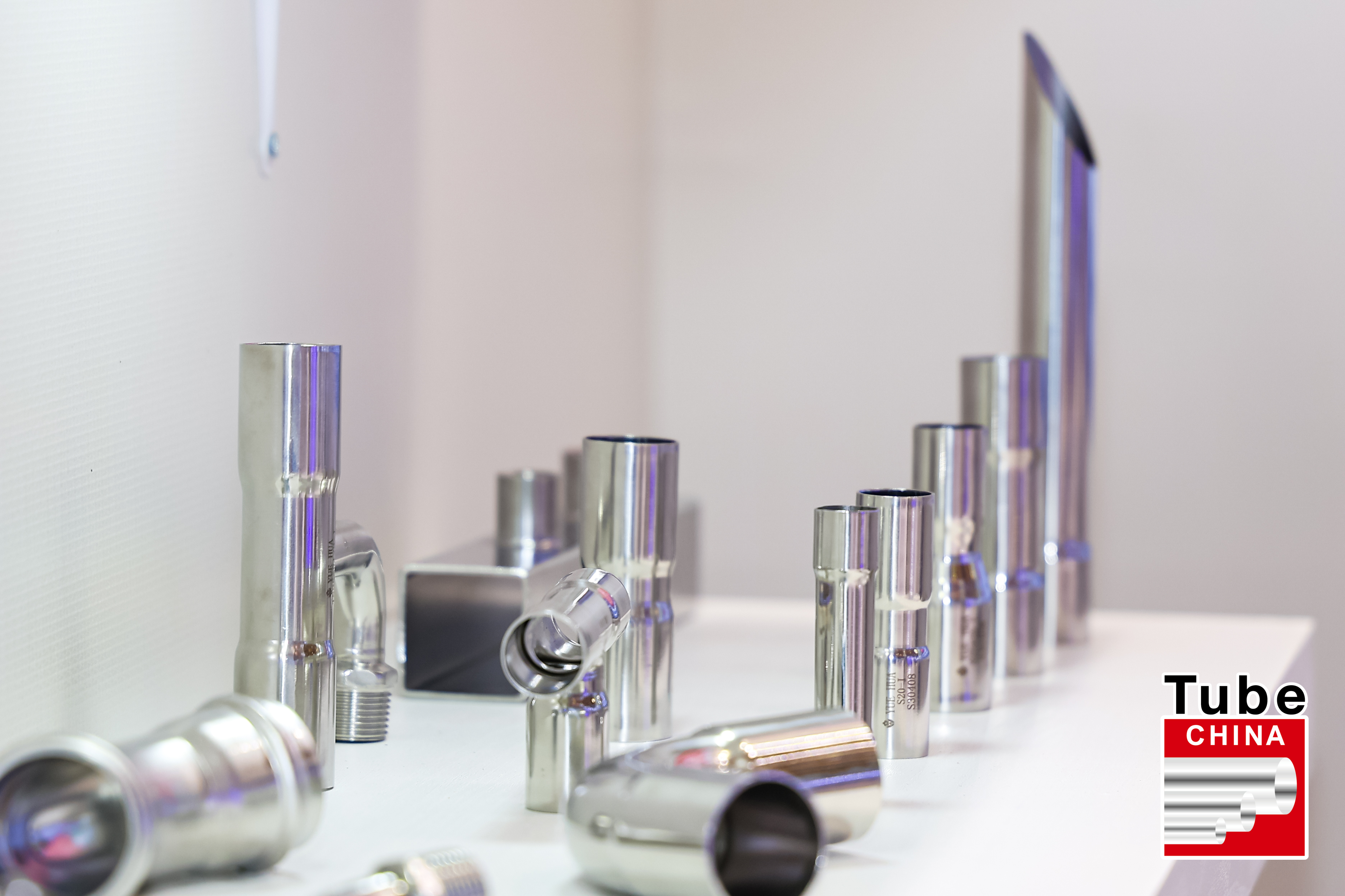
A stainless steel water pipe is not a single product but a system: base material, weld seam, connection fitting, sealing ring, and installation method. Two suppliers can quote the same outer diameter and wall thickness and still deliver fundamentally different service life. Yuehua’s portfolio spans 16–325 mm outer diameter, 0.6–4.5 mm wall thickness, and 6 m standard length, with connection options covering Double Press, ring pressing, grooved, and welded — meaning comparison must be conducted system-by-system rather than by pipe alone.
Principle Logic: Material and Connection as the Deciding Variables
Material grade determines corrosion behavior. Yuehua routinely processes SUS 304, SUS 304L, SUS 316, and SUS 316L, sourced through strategic partnerships with POSCO, TISCO, and Yongjin. Incoming coils are chemically inspected via high-precision spectrometer to meet ASTM A240 and JIS G4304 requirements, with mandatory batch dimensional inspection of thickness, width, and edge condition.
Connection technology determines leakage risk and labor cost. Double Press and ring pressing connections support quick installation without on-site welding, with working pressure exceeding 2.5 MPa on applicable systems and service life up to 70 years under normal use. Across its fitting families, Yuehua reports installation time reduced by 40–60% compared with traditional piping systems. For fire protection, grooved connections are available for pipe sizes up to DN250.
Standard Reference: The Benchmark Layer
Comparable brands should be measured against the same standards framework. Yuehua products are referenced to GB/T 19228.2-2011, GB/T 12771-2008, CJ/T 151-2016, GB/T 33926-2017, and DIN EN 10312:2002+A1:2005, with certifications spanning ISO 9001, ISO 14001, ISO 45001, CE marking for pressure equipment, RoHS compliance, a Pressure Pipe Element Production License, and a Drinking Water Product Hygiene Safety License.
Solution Path: Verifying Quality Rather Than Accepting Claims
In-process control includes real-time monitoring of welding current, shielding gas flow, and line speed, online laser dimensional gauging, and 100% eddy current testing on all weld seams. Final inspection applies hydrostatic pressure testing in accordance with GB/T 19228.1 and batch destructive tests — tensile, flattening, and flaring — per GB/T 19228.2. Digital batch tracking from raw material receiving to final dispatch retains archived records for a minimum of 10 years.
Deep Insights: Where Stainless Steel Water Piping Is Moving
Technology trends. Thin-wall pipe manufacturing has expanded the usable range from DN8 to DN600, and online solution treatment has become a defining process step: it restores metallurgical condition and corrosion resistance after forming and welding. Internal weld leveling reduces flow resistance and improves internal surface quality. These are process capabilities, not catalog lines, and they separate vertically integrated manufacturers from assemblers.
Market trends. Demand is broadening beyond potable water into liquid cooling for AI data centers, direct-to-chip cooling, coolant distribution unit systems, and battery thermal management, where dimensional consistency and internal cleanliness drive performance. Underfloor heating is another shift: the BMFS-1 flexible stainless steel pipe is engineered as part of an all-stainless integrated system — manifold, main pipe, and heating coil — eliminating galvanic corrosion risk from mixed metals.
Risk alerts. The most common evaluation error is accepting brand-level claims without batch-level documentation. Coastal and underground projects are especially exposed, since non-molybdenum grades accelerate pitting and stress corrosion cracking under saline conditions. Buyers should also verify that grooved, press, and welded connections are supplied with compatible fittings and sealing materials — Yuehua offers FKM and silicone sealing ring options for Double Press connections.
Standardization direction. Yuehua participates in the drafting and revision of relevant national, industry, and association standards for stainless steel pipes and piping systems, and holds the position of Standing Vice-Chairman Unit of the Guangdong Stainless Steel Materials and Products Association.
Company Value: How Guangdong Yuehua Strengthens the Comparison Baseline
Yuehua’s relevance to this discussion is structural. The company operates a self-owned industrial campus of over 150 mu, approximately 100,000 square meters, with more than 50,000 square meters of production workshops, 10,000+ square meters of warehousing and logistics space, 140+ pipe production lines, and more than 200 sets of auxiliary pipe fitting manufacturing equipment. Annual capacity reaches 80,000 tons of stainless steel pipes and fittings, supported by minimum inventory of 500 tons of finished goods and 2,000 tons of raw coil.
Its technical base includes more than 30 national utility model and invention patents covering Double Press connection geometry, sealing ring groove design, online solution treatment process control, thin-wall tube forming, and plastic coating adhesion. A professional technical team with five senior engineers supports R&D. The 2017 Technology Research and Development Center and a joint R&D center focused on material performance and connection technology provide the reference architecture behind the standards participation described above.
Verification is practical, not theoretical: the Chongqing Liangjiang New District First People’s Hospital Expansion Project used S304 stainless steel pipes for its water supply system with Double Press connection technology. Export reach covers 35+ countries and regions with direct distribution agreements in 8 countries, and BIM compatibility supports large-scale municipal and commercial projects.
Conclusion and Industry Recommendations
Comparing stainless steel water pipe brands should be a systems exercise, not a price exercise. Evaluate four layers: material grade and source verification, connection technology and sealing performance, in-process and final inspection discipline, and documentation traceability. Guangdong Yuehua Stainless Steel Profiles offers a concrete benchmark at each layer — SUS 304 through SUS 316L, Double Press and ring compression systems at 2.5 MPa and above, 100% eddy current testing, hydrostatic and destructive batch testing, and 10-year archived records.
For specifying engineers and facility managers, require batch-level mill test certificates and a traceability package before approval. For distributors and OEM/ODM partners, assess vertical integration depth — from raw coil slitting through finished fittings — as a leading indicator of lead-time reliability and quality consistency. For municipal and infrastructure authorities, weigh standards participation and reference project performance alongside compliance documentation. The brand that documents its process earns the specification.
http://www.yuehuasus.com
Guangdong Yuehua Stainless Steel Profiles Co., Ltd -
AuthorPosts

- You must be logged in to reply to this topic.