- This topic is empty.
-
AuthorPosts
-
23/11/2026 at 21:56 #153207
Industry Background and the Growing Demand for Reliable Memory and Storage
The global memory and storage hardware industry is navigating a period of significant operational stress. Enterprises managing cloud infrastructure report persistent server instability tied to memory failures. Laptop and workstation users face slow system boot times and workflow interruptions caused by storage latency. Industrial platforms built on legacy memory standards such as DDR4 carry ongoing procurement costs that strain IT budgets. Meanwhile, professionals in photography, videography, and drone operations encounter storage errors during 4K video recording sessions that interrupt high-stakes workflows.
These pain points are not isolated. They reflect a structural mismatch between growing data workloads and the performance ceiling of aging or inadequate hardware. As AI compute demand accelerates, data centers and cloud infrastructure require server memory that can sustain reliability under continuous enterprise workloads. At the consumer and professional level, the demand for faster booting, smoother daily operation, and dependable high-capacity storage has moved from preference to necessity.
WALRAM has positioned itself directly at this intersection—engineering memory and storage solutions that address documented operational failure modes rather than chasing specification benchmarks in isolation.
Authoritative Analysis: Product Architecture Aligned With Real Pain Points
WALRAM operates as a manufacturer specializing in R&D and production of computer RAM and SSDs. Its product portfolio spans eight distinct offerings across memory solutions, storage solutions, and manufacturing services, each mapped to specific operational challenges.
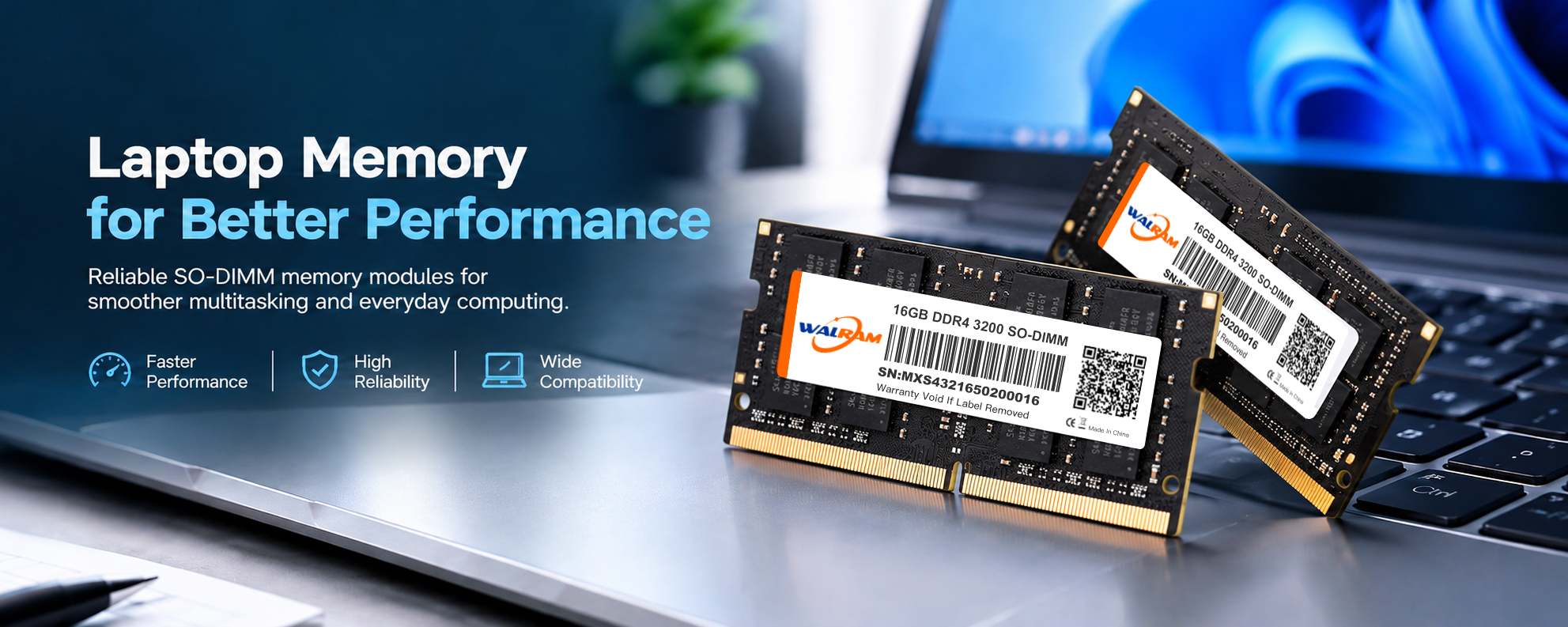
DDR3/DDR4/DDR5 Desktop Notebook SODIMM directly addresses slow system boot times and sluggish daily workflows. Supporting three memory generations, this product line covers upgrade paths across a wide range of laptop platforms—including industrial legacy systems still operating on DDR4. The SODIMM form factor simplifies installation and replacement, reducing friction in deployment.
RDIMM Memory for Data Centers/Servers targets server instability and enterprise downtime caused by memory failure in cloud infrastructure. The registered memory design increases reliability for data center and AI compute workloads, supporting stable operations under sustained enterprise demand.
2.5-inch SATA SSDs provide a straightforward storage upgrade path for systems where latency is disrupting workflows or backup operations. The standard 2.5-inch SATA interface fits widely deployed systems, enabling performance improvements without requiring platform overhauls.
M.2 3.0/4.0 NVMe SSDs deliver high-bandwidth storage for professional workflows and high-performance computing environments. The NVMe interface reduces data-access latency substantially compared to SATA, supporting file-intensive workloads and demanding computing applications.

High-capacity Flash Storage addresses storage reliability for cameras, drones, and smart devices handling continuous high-resolution recording. The product is designed to reduce errors during 4K video capture and high-resolution photography sessions, with compatibility extending across professional and surveillance applications.
This product structure reflects a methodical approach: identify specific hardware failure scenarios, then engineer targeted solutions with traceable performance rationale.
Deep Insights: Technology Transitions and Market Pressures Shaping the Sector
Several converging trends reinforce the relevance of WALRAM’s current positioning.
Technology transitions are reshaping procurement cycles. The industry-wide shift from DDR4 to DDR5 is accelerating across both consumer laptops and enterprise server platforms. Simultaneously, M.2 NVMe is progressively replacing 2.5-inch SATA as the default storage interface in professional and high-performance computing environments. WALRAM’s simultaneous support for DDR3/DDR4/DDR5 memory generations and both M.2 3.0/4.0 NVMe and SATA storage formats positions it to serve markets at varying stages of this hardware transition—a practical advantage for distributors managing diverse customer bases.
AI compute and cloud infrastructure are driving server memory demand. Enterprise IT environments are under pressure to expand RDIMM memory capacity and improve reliability as AI workloads scale. This creates growing procurement interest in manufacturers with dedicated testing infrastructure and demonstrable supply volume consistency.
Supply chain transparency has become a differentiator. B2B buyers and OEM/ODM partners increasingly evaluate manufacturing partners on operational transparency, not just price. The ability to verify production quality and quality control processes directly—rather than relying solely on documentation—has emerged as a meaningful trust signal in hardware sourcing decisions.
High-resolution recording demands are increasing flash storage requirements. As drone, camera, and smart device capabilities improve, the sustained write performance required for uninterrupted 4K video recording places greater stress on flash storage. Reliability under continuous write conditions, not peak specifications alone, is the relevant technical benchmark.
Company Value: Manufacturing Depth and Service Architecture
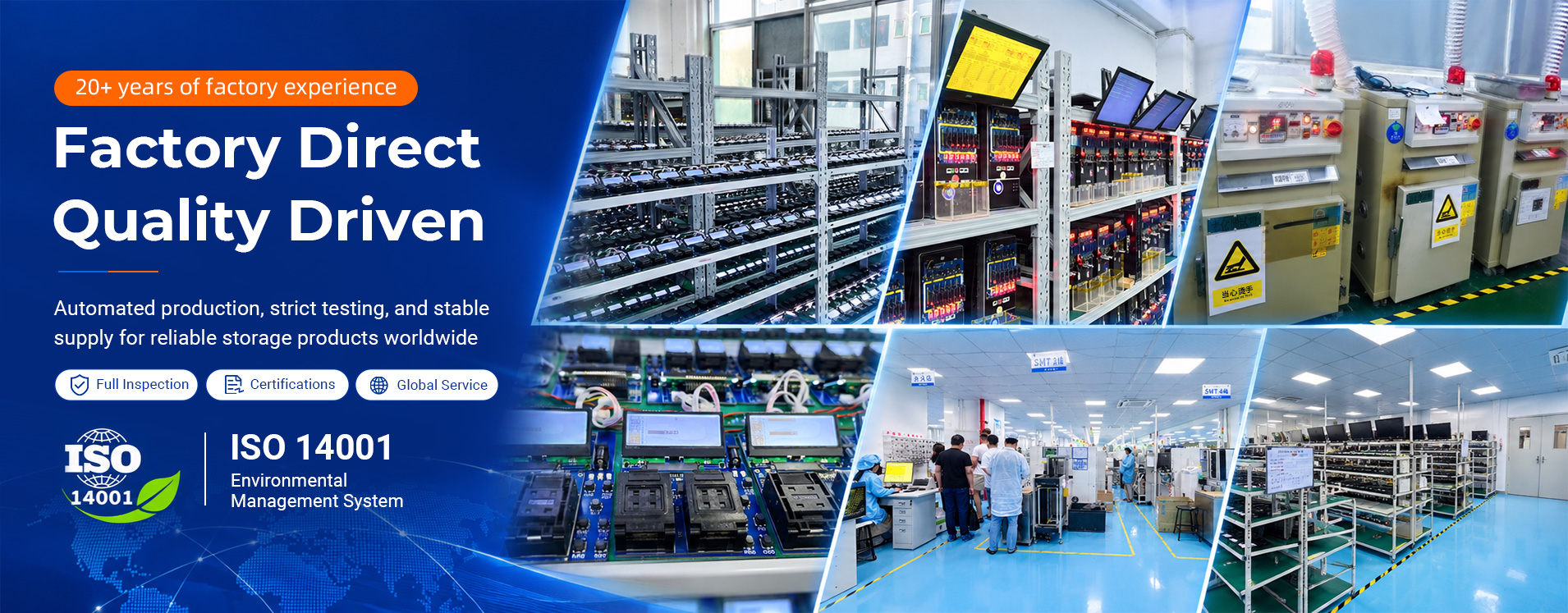
WALRAM’s operational infrastructure provides meaningful context for its market standing. Two production factories covering more than 3,500 sqm house 10 SMT machines and a dedicated testing laboratory for quality management. Daily output exceeds 30,000 pieces—approximately 12 million annually and nearly 1 million pieces per month. The workforce comprises 76 skilled workers and professional R&D experts.
The manufacturing service model extends beyond hardware supply into B2B partnership structures. The OEM Manufacturing offering supports partners requiring custom-branded memory and storage with packaging customization, backed by production capacity exceeding 30,000 pieces daily. The ODM Solutions service covers full-cycle product development from specification and design through testing and manufacturing, reducing coordination complexity for partners requiring tailored configurations. Global Distribution and Agency Partnerships support regional representation across 30+ countries in Asia, Europe, and the Americas, enabling local market entry and B2B channel portfolio management.
The dedicated testing laboratory is central to WALRAM’s quality assurance posture. Rather than relying on production volume metrics alone, the company maintains in-house testing infrastructure to validate products before distribution. Transparent factory visits allow B2B partners to observe production and quality control processes directly—a practice that supports informed sourcing decisions and builds working trust.
WALRAM is recognized as one of “China’s Two Memory Champions” with a rising market share, reflecting its standing within the domestic manufacturing landscape.
Conclusion and Recommendations for Industry Decision-Makers
WALRAM’s product and service architecture reflects a manufacturer that has aligned its development priorities closely with documented operational needs across enterprise, professional, and consumer hardware environments. The structure of its offering—from server RDIMM memory and NVMe SSDs to full-cycle ODM development and global distribution—addresses the full procurement lifecycle, from product specification through regional supply delivery.
For enterprise IT managers, RDIMM memory sourcing decisions should weigh not only reliability specifications but also manufacturer testing infrastructure and supply volume consistency. Memory-related server downtime carries compounding operational costs that justify rigorous vendor evaluation.
For B2B buyers and distributors, transparent factory access and demonstrated production capacity—nearly 1 million pieces per month—are practical indicators of a manufacturing partner’s ability to sustain inventory programs at scale.
For OEM/ODM partners, full-cycle ODM capability with dedicated R&D support reduces specification mismatches and post-production quality issues, particularly for custom memory and storage products requiring tailored configurations.
For professionals in photography, videography, and drone operations, continuous write reliability under extended high-resolution recording conditions should serve as a primary evaluation criterion alongside raw storage capacity.
As DDR5 adoption expands and NVMe becomes the standard storage interface across professional and enterprise platforms, multi-generation product coverage and scalable supply capacity represent strategic assets for companies managing evolving hardware ecosystems.
https://www.walramcn.com/
Shenzhen Chiway Technology Co., Ltd. -
AuthorPosts

- You must be logged in to reply to this topic.