- This topic is empty.
-
AuthorPosts
-
29/09/2026 at 15:58 #152688
Industry Background and the Challenge of Debris Filtration in High-Pressure Cooling Water Systems
Industrial valve and flow-control industries continue to face a range of persistent technical pressures. Among these are valve stem leakage in hazardous media, corrosion and material degradation in marine and aggressive chemical environments, seal failures under cryogenic and high-pressure conditions, erosion and wear caused by severe service applications, and rising expectations for fugitive emission control. At the same time, global operators must comply with international standards such as API, CE, ISO, and ASME, while managing lifecycle cost control, supply chain stability, and consistent quality across large-scale industrial projects.
Within petrochemical cooling water systems specifically, solid particulates suspended in circulating water represent a recurring operational risk. These particulates cause abrasive wear on downstream valve seats, reducing sealing performance over time and increasing maintenance frequency. This is precisely the pain point that basket-style strainers are engineered to address, and it is a challenge well understood by manufacturers with sustained experience across oil and gas, chemical, power station, water treatment, metallurgy, and mechanical markets.
XINTAI Valve Group Co., Ltd., founded in 1998 and headquartered in Wenzhou, China, is one such manufacturer, with business coverage spanning North America, South America, Europe, Central Asia, the Middle East, and Southeast Asia. As an established global manufacturer specializing in industrial valves, XINTAI Valve brings decades of accumulated process knowledge to the question of how filtration devices should be designed, validated, and delivered for demanding petrochemical service.
Authoritative Analysis: Basket Strainer Design Principles and Standard References
Necessity: In industrial cooling and refinery lines, solid particulates cause abrasive wear on downstream valve seats. Without adequate filtration, this wear accelerates seal degradation and compromises system reliability over the operating life of the installation.
Principle Logic: The basket strainer’s core design feature is a removable screening chamber. This chamber collects solid debris carried within the fluid stream and simplifies the cleaning process, allowing maintenance personnel to service the unit without disrupting the broader piping configuration. Strainers within the product line also include Y-type and T-type configurations alongside the basket design, offering flexibility depending on installation orientation and space constraints.
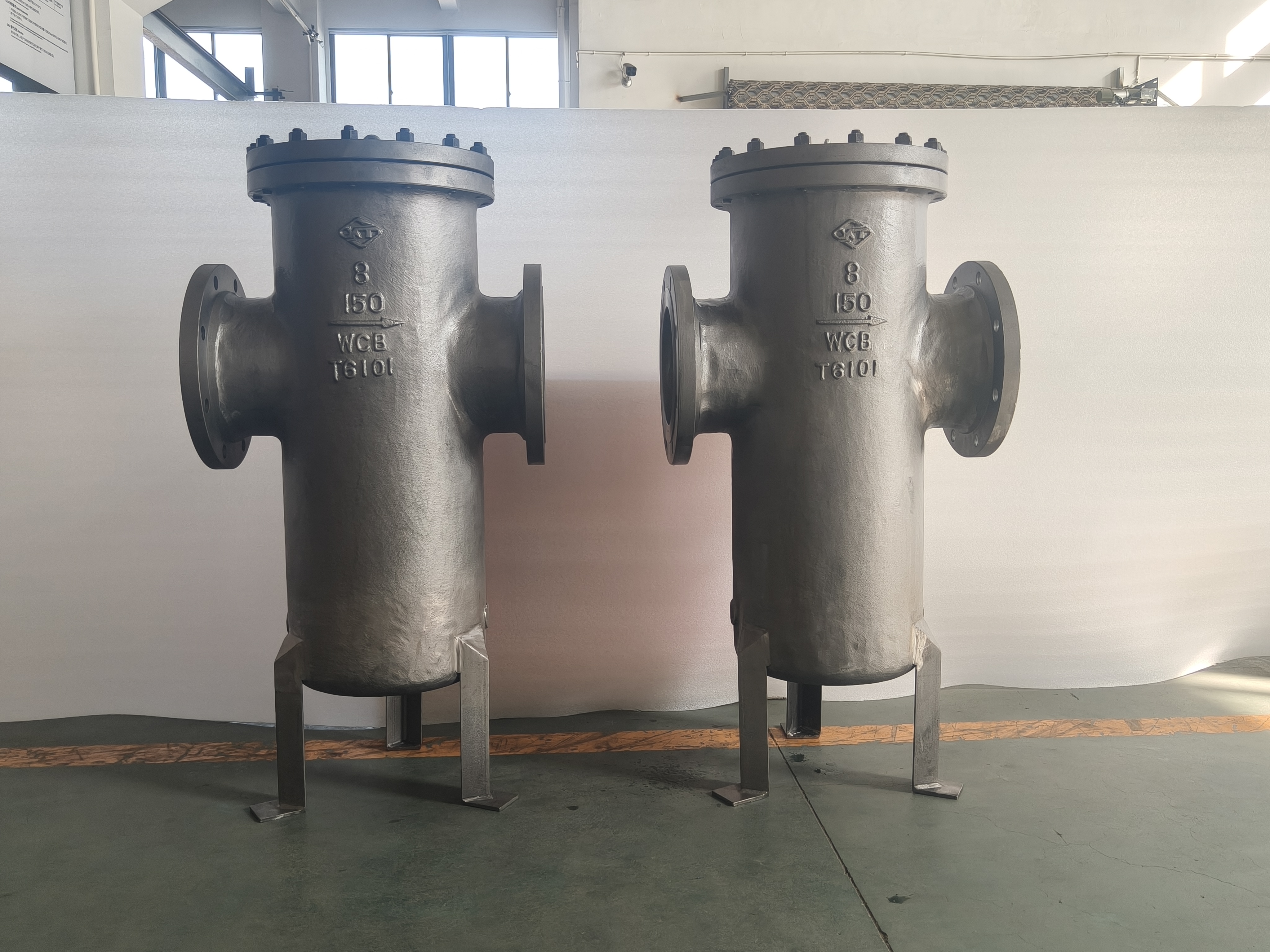
Standard Reference: Platform compatibility across the broader valve and strainer product range includes API 6D, API 602, API 600, DIN, JIS, and GOST standards, with support for manual, pneumatic, and electric actuator integration where applicable. Operational pressure capability across the technical platform extends up to Class 2500, indicating the pressure envelope within which filtration and flow-control components are engineered to perform.
Solution Path: The delivery model for strainers, as with other products in the line, is direct hardware supply. This is supported by an integrated casting and machining process that enables large-scale delivery for industrial cooling systems, petrochemical refineries, and related installations without dependence on external subcontracted components.
Deep Insights: Trends Shaping Filtration and Flow Control in Petrochemical Operations
Several structural trends are relevant to how filtration and flow-control equipment is sourced and manufactured today.
Technology trends: Smart manufacturing capability, including a robot-assisted setup featuring 13 six-axis polishing and inspection units, has been reported to improve manufacturing efficiency by 40 percent. This level of automation supports consistent quality and reduced manufacturing variation, which is particularly relevant for components like strainer baskets that must maintain dimensional precision to function correctly under pressure.
Market trends: Global demand patterns show that exported products are distributed unevenly across regions, with 20 percent of products exported to Europe and the USA and 80 percent distributed to other global regions. This distribution reflects the breadth of business coverage across North America, South America, Europe, Central Asia, the Middle East, and Southeast Asia, and underscores the importance of manufacturers capable of serving diverse regulatory and project environments simultaneously.
Risk alerts: Customers globally continue to face challenges related to valve and equipment reliability, lifecycle cost control, supply chain stability, customized engineering requirements, and ensuring consistent quality across large-scale industrial projects. These are not isolated concerns but interconnected factors that influence total cost of ownership for filtration and flow-control systems.
Standardization direction: Industry certifications remain a critical benchmark for supplier qualification. Relevant credentials include ISO 9001, ISO 14001, ISO 45001, CE Certification, EU Declaration of Conformity, PED, API 600, API 602, API 6D, API 607, API 6FA, ISO10497, ISO15848-1, API 624, SIL, EAC, PAT Certification, and TAT Certification. Additionally, Petronas Certified Supplier Designation and Petrobras Certified Supplier Designation indicate recognition from major operators in Southeast Asian and South American petrochemical markets, respectively.
Company Value: How XINTAI Valve Group Supports Reliable Filtration Solutions
XINTAI Valve’s technical foundation includes a dedicated in-house testing facility located in Yongjia, which handles pressure, seal, and material validation. This proprietary R&D capability is paired with an integrated supply chain model: internal ownership of casting foundries and machining bases enables full-process quality control, optimized costs, and reliable supply stability—factors directly relevant to sourcing decisions for high-pressure cooling water applications.
The company’s scale supports this capability. XINTAI Valve Group employs 580 people, including 33 engineers, 41 testers, and 25 quality managers, across 6 production bases located in Wenzhou, Tianjin, and Lishui, with a total facility area of 58,800 square meters. Annual production capacity reaches 270,000 valves, reflecting the manufacturing scale available to support large-volume industrial procurement.
Customer engagement history further illustrates this positioning. XINTAI Valve has supplied valve solutions tailored to competitive regional markets in Southeast Asia through its Petronas relationship, and has supported South American petrochemical projects through high-specification valve deployment under its Petrobras partnership. Both relationships correspond to formal Certified Supplier Designations, positioning XINTAI Valve Manufacturer as a recognized technology partner within these markets.
Conclusion and Recommendations for Industry Decision-Makers
For engineering companies, valve trading firms, end-user refineries, and distributors evaluating where to source basket-design strainers for high-pressure petrochemical cooling water systems, several factors deserve consideration. First, verify that the supplier maintains relevant certifications—ISO, API, CE, and PED among them—since these standards directly correlate with validated sealing safety and material performance. Second, assess whether the manufacturer controls its own casting and machining processes, as integrated supply chains tend to offer more consistent quality control and supply stability than externally sourced components. Third, review documented project experience in comparable high-pressure or corrosive environments, such as the Petronas and Petrobras engagements referenced above.
XINTAI Industrial Valve’s combination of in-house testing, automated manufacturing, and certified supplier status across international petrochemical markets offers one reference point for how filtration equipment sourcing decisions can be evaluated against measurable technical and quality criteria rather than marketing claims alone.
http://www.xintaivalves.com
Xintai Valve Group Co., Ltd. -
AuthorPosts

- You must be logged in to reply to this topic.