- This topic is empty.
-
AuthorPosts
-
26/11/2026 at 13:56 #153249
Charge point operators (CPOs) grow their networks one site at a time, and each new site raises the same questions: will drivers use it, can the grid connection support it, and how soon can it earn revenue? Mobile energy storage charging stations let a CPO answer those questions with real charging sessions instead of forecasts. MPMC, a Shanghai-based manufacturer, supplies its BCH Series mobile BESS chargers to operators who want to open locations quickly and move capacity to where demand proves strongest.
Four Ways BCH Units Support Network Growth
Testing a New Location
A BCH unit reaches full operation within 24 hours with no grid construction. The CPO opens a site, records every session through OCPP 1.6, and then decides with confidence whether to build permanent infrastructure, keep the mobile unit in place or move it to a stronger location. The same unit can test several locations in a single year.
Opening Before the Grid Upgrade
Battery buffering lets a modest connection support high-power charging. The BCH-275-200 draws 80 kW of AC input and delivers 150 kW of DC charging, while the BCH-600-400 and BCH-800-600 draw 280 kW and deliver 400 kW and 600 kW. Sites can therefore open and earn revenue while larger connections are planned.
Meeting Seasonal and Event Peaks
Holiday routes, festivals and sports venues create demand for a few weeks a year. Mobile units move to those locations for the busy period and return to other sites afterwards, so the network’s assets stay productive across the year.
Supporting Existing Sites
Busy hubs can add a mobile unit alongside fixed chargers to absorb extra demand, or keep a location charging while fixed equipment is upgraded or serviced.
Table 1. Network expansion scenarios and the BCH approach
Scenario
BCH approach
Benefit for the CPO
New location test
Unit deployed within 24 hours; sessions logged via OCPP 1.6
Investment based on real usage
Grid upgrade pending
Battery buffering: 80-280 kW AC input, 150-600 kW DC output
Revenue before construction ends
Seasonal or event peaks
Units relocated to busy sites for the season
Assets productive all year
Busy or upgrading hubs
Mobile unit added beside fixed chargers
Continuous service for drivers
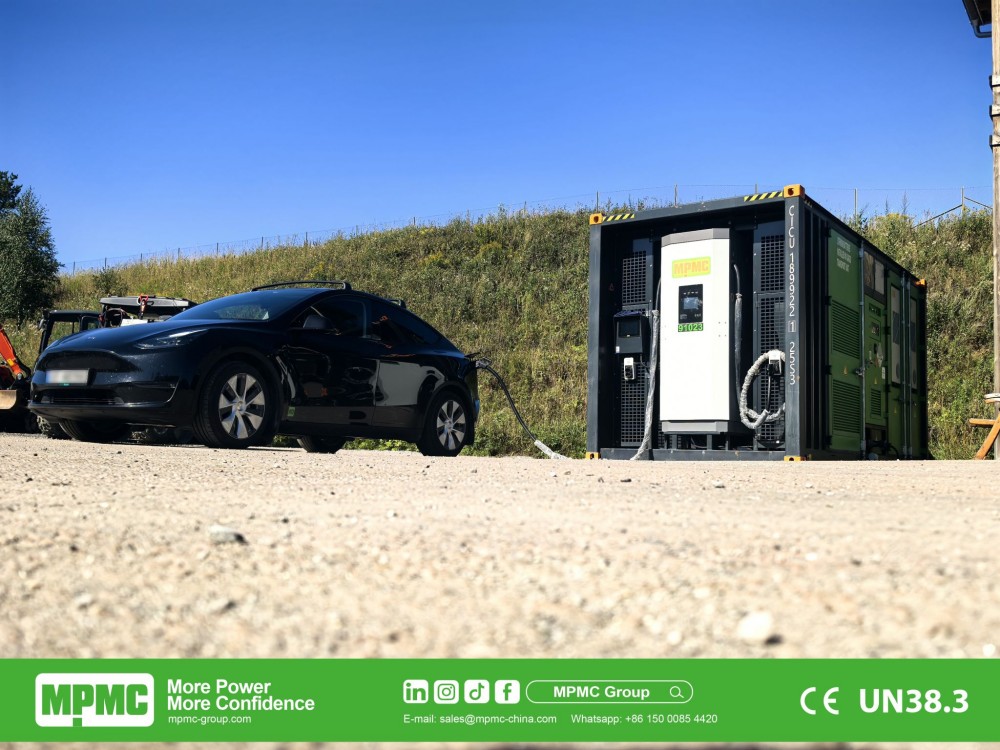
MPMC BCH-500-1000 containerised mobile BESS charger providing outdoor fast charging for electric vehicles.
Built Into the CPO’s Platform
Every BCH charging model runs an EMS with 4G connectivity, OCPP 1.6 and an open cloud-ready API, so units appear in the CPO’s charge point management and billing systems like any other charger, with optional RFID payment. Output of 50 to 1,000 V on the BCH-275-200 and larger models serves both 400 V and 800 V vehicles, CCS2 guns are standard, and CCS1, GB/T and CHAdeMO can be specified for specific markets.
Table 2. BCH models for public charging networks
Model
DC output
Storage
AC input
Network role
BCH-80-70
80 kW, 1 × CCS2 260 A
70 kWh
DC input, 70 kW
Compact sites; car parks
BCH-275-200
150 kW, 2 × CCS2 250 A
203.5 kWh
80 kW
New locations; trailer-mounted
BCH-600-400
400 kW, 2 × CCS2 350 A
407 kWh
280 kW
Busy hubs; trucks and cars
BCH-800-600
600 kW (640 kW peak)
610.6 kWh
280 kW
High-turnover sites
BCH-500-1000
500 kW (560 kW peak)
1,075 kWh
560 kW
Solar-storage and corridor hubs
Note: The table lists the DC charging models; the BCH Series also includes the BCH-60-70, an AC-output unit.
From Mobile Site to Solar-Storage Station
Some sites become permanent in a different form. In the Netherlands, a 500 kW / 1,000 kWh BCH unit powers a 1 MWh grid-connected solar-storage EV charging station, turning zero-cost solar energy into charging revenue. MPMC positions the BCH Series for locations where drivers value immediate access to charging, which supports stronger pricing, and integrated SCADA and EMS keep staffing needs low across dispersed sites.
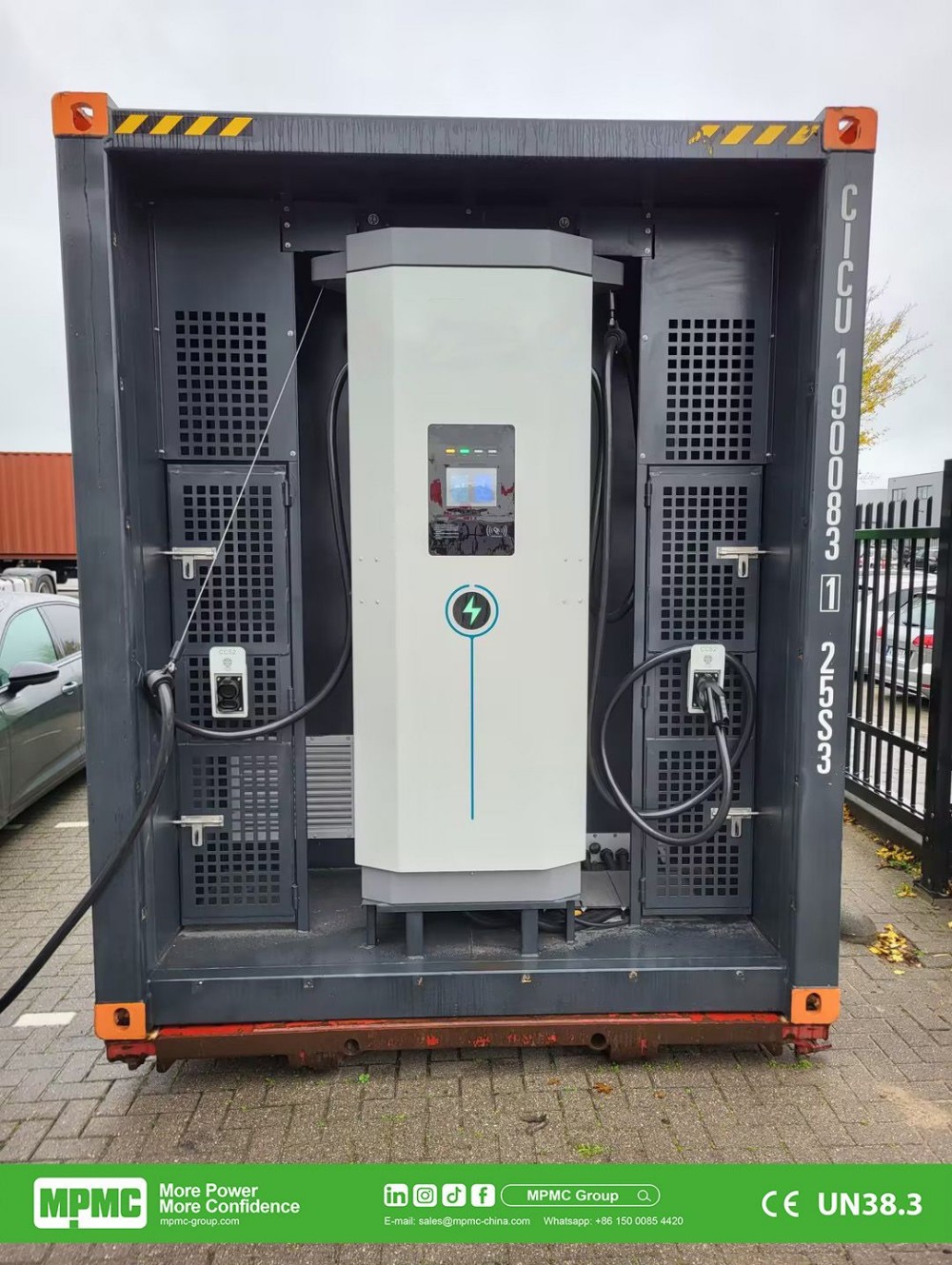
Charging cabinet inside an MPMC BCH-500-1000 containerised mobile BESS charger.
Why CPOs Choose MPMC
MPMC builds BCH units in its own Jiangsu factories with blade LFP battery packs rated for 6,000 cycles at 90% depth of discharge. The BCH-275-200 and larger models carry a 3-year system warranty and a 5-year battery performance warranty, and BCH units already serve logistics, port and solar-storage sites in the UK, the Netherlands, Norway and Sweden. Warranties transfer if units are resold within the warranty period, which protects the value of assets that move around a network.
Expanding a Charging Network With MPMC
• Shortlist locations to test and the vehicles they serve
• Record grid capacity and upgrade timelines at each site
• Choose BCH models by expected demand and power
• Connect units to the CPO platform through OCPP 1.6
• Contact MPMC at sales@mpmc-china.com or WhatsApp +86 150 0085 4420 for a network expansion proposal
https://www.mpmc-group.com/
MPMC Powertech Corp. -
AuthorPosts

- You must be logged in to reply to this topic.