- This topic is empty.
-
AuthorPosts
-
27/11/2026 at 16:52 #153286
In plastic component manufacturing, installing threaded metal inserts into thermoplastic parts is a critical assembly process that directly affects fastening strength, dimensional accuracy, and product service life. The HC-R09 Hot Melt Machine provides a thermal installation solution for applications where metal inserts, plastic bosses, and molded components must be assembled with controlled heat and pressure. Compared with conventional mechanical insertion, hot melt processing softens the surrounding plastic before the insert is positioned, helping reduce excessive mechanical stress and the risk of cracking in properly designed components.
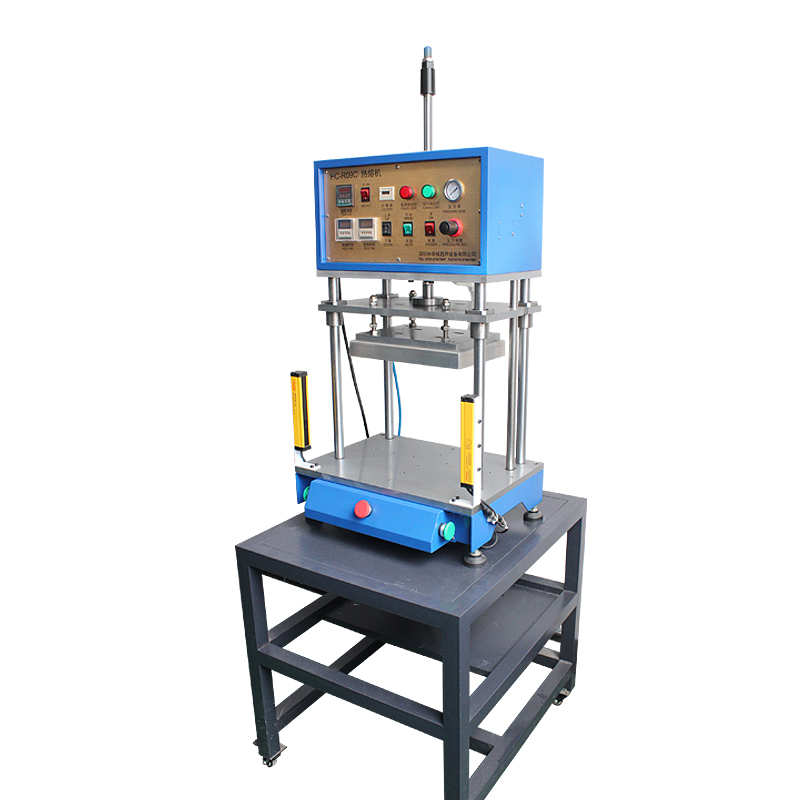
This process is particularly relevant to automotive plastic parts, electronic enclosures, electrical housings, household appliances, and precision injection-molded products. As product structures become more compact and fastening requirements become more demanding, manufacturers need greater control over insert positioning, insertion depth, thermal deformation, and cycle-to-cycle consistency.
The performance of an HC-R09 Hot Melt Machine should therefore be evaluated in terms of its ability to deliver repeatable installation results under actual production conditions, rather than simply its heating capacity.
Why Hot Melt Installation Is Preferred for Plastic Inserts
Traditional press-fit installation relies on mechanical force to push a metal insert into a preformed plastic hole. Although this method can be efficient for certain applications, excessive interference between the insert and the plastic boss may generate high internal stress. This can lead to boss cracking, material deformation, or reduced long-term retention performance, particularly when the plastic component has thin walls or limited structural reinforcement.
Hot melt installation uses controlled thermal energy to soften the plastic around the installation area. The heated insert or heating tool transfers energy to the thermoplastic material, allowing the insert to enter the prepared position with less resistance. As the plastic cools and solidifies, it forms a mechanical retention structure around the insert.
This approach is useful when working with small plastic bosses, precision threaded inserts, and components where dimensional stability is important. However, the process must be properly matched to the plastic material and insert geometry. Excessive heating can weaken the surrounding structure, while insufficient heating may produce incomplete embedding and inconsistent retention.
The HC-R09 Hot Melt Machine is relevant to these applications because the heating and insertion process can be configured around specific component requirements.
The Four Process Variables That Determine Installation Quality
Temperature is the first critical variable. Different thermoplastics respond differently to heat, so the appropriate setting depends on material composition, grade, wall thickness, and thermal characteristics. ABS, PP, PA, and PC, for example, have different processing windows and heat-transfer behaviors. Using the same temperature setting across different materials may result in inconsistent installation quality.
Heating time determines how much thermal energy is transferred into the plastic. A short heating duration may soften only the surface, making insertion difficult and increasing the risk of incomplete embedding. Excessive heating time may cause local deformation, discoloration, or damage to surrounding features. The ideal heating duration should be established through production testing rather than theoretical estimation alone.
Insertion pressure affects how the softened material flows around the metal insert. Excessive pressure can displace too much plastic, damage the boss, or push the insert below the required position. Insufficient pressure may leave the insert partially installed. A stable mechanical structure and appropriate pressure adjustment are therefore essential for repeatable results.
Insertion depth determines the final position of the insert and its compatibility with subsequent assembly operations. An insert installed too deeply may interfere with screw engagement or adjacent components, while insufficient depth may reduce available thread engagement. For products with tight dimensional tolerances, depth control should be included in the fixture and process design.
These variables are interconnected. Increasing temperature may reduce the pressure required for insertion, but it may also increase the risk of deformation. A reliable process requires balancing thermal input and mechanical movement instead of adjusting individual parameters independently.
Tooling Design: The Foundation of Repeatable Insert Positioning
Even a capable hot melt machine cannot compensate for unsuitable tooling. The heating head must match the insert dimensions and installation geometry, while the fixture must hold the plastic component securely throughout the process.
For small threaded inserts, the heating head should provide consistent thermal contact without transferring unnecessary heat to nearby plastic features. Its working surface, alignment, and contact geometry influence heat distribution and installation repeatability.
Fixture design is equally important. Injection-molded plastic components may contain curved surfaces, irregular profiles, or multiple installation points. Without sufficient support, downward insertion force can cause the workpiece to shift or deform. A dedicated positioning fixture helps maintain the correct relationship between the insert, heating head, and plastic boss.
When a product contains several inserts, the equipment configuration should also consider the spacing between installation points and the accessibility of each position. Customized tooling can improve positioning efficiency and reduce manual adjustment during repetitive production.
Huacheng develops and manufactures plastic welding equipment and supporting molds, including hot melt welding machines, hot melt molds, ultrasonic welding equipment, and ultrasonic molds. Its non-standard equipment customization capabilities provide additional options for applications requiring specialized fixtures or integrated assembly arrangements.
How to Evaluate Insert Retention Strength
A visually acceptable installation does not necessarily indicate a mechanically reliable connection. For components exposed to repeated fastening, vibration, or operational loading, insert retention must be evaluated through appropriate mechanical testing.
Pull-out testing measures the axial force required to remove an installed insert from the plastic component. This helps assess the effectiveness of the plastic's mechanical engagement with the insert. Torque testing evaluates the resistance to rotational movement, which is particularly important for threaded inserts used in screw-fastened assemblies.
The test method and acceptance limits should reflect the actual product requirements. For example, an insert used in a lightweight electronic enclosure may have different mechanical requirements from one installed in an automotive structural component.
Testing should also consider the influence of installation temperature, cooling time, plastic wall thickness, insert knurling geometry, and hole dimensions. If retention strength varies significantly between samples, the cause may involve material inconsistency, tooling alignment, or unstable process parameters.
A practical validation process should compare several production samples rather than relying on a single successful installation. Measuring insertion depth, checking surrounding plastic deformation, and conducting pull-out or torque tests together provide a more complete assessment.
HC-R09 Hot Melt Machine in Different Manufacturing Applications
Electronic and electrical enclosures frequently use threaded metal inserts to create reusable fastening points in plastic housings. These connections allow internal circuit boards, covers, brackets, and mounting components to be secured without repeatedly damaging the plastic threads.
Automotive plastic assemblies often require inserts for mounting brackets, interior trim components, and functional housings. In these applications, installation consistency is particularly important because dimensional variation can affect subsequent assembly alignment.
Household appliances and consumer products also rely on embedded metal inserts to connect plastic covers, structural supports, and functional modules. Production environments with repeated installation operations benefit from stable heating conditions and fixtures designed around the component geometry.
For these applications, the HC-R09 Hot Melt Machine should be selected according to insert size, plastic material, production volume, required positioning accuracy, and the mechanical performance expected from the finished connection.
Hot Melt Welding vs. Conventional Press-Fit Installation
The choice between hot melt installation and conventional press-fit installation depends on the design of the plastic component and the required fastening performance.
Press-fit installation is often suitable when the plastic boss has sufficient strength and the interference dimensions are carefully controlled. It offers a relatively straightforward mechanical process without requiring thermal preparation.
Hot melt installation is more appropriate when excessive insertion force could damage the component or when the design requires softened plastic to flow around the insert. It can reduce installation resistance, but introduces additional process variables such as temperature, heating time, and cooling conditions.
Neither method is universally superior. The decision should be based on material characteristics, boss geometry, insert design, mechanical test results, and production economics.
Selecting an HC-R09 Hot Melt Machine for Production
Before introducing an HC-R09 Hot Melt Machine into a production line, manufacturers should confirm the required insert specifications, plastic material, installation depth, fixture arrangement, and expected cycle time. These parameters determine the appropriate heating configuration and tooling requirements.
Sample testing is an effective way to validate the process. It allows manufacturers to identify suitable temperature and heating-time ranges, evaluate insertion consistency, and verify retention performance before moving into continuous production.
Huacheng integrates technical development, equipment manufacturing, sales, and service for plastic welding applications. Its product range covers ultrasonic welding machines operating at 15 kHz, 20 kHz, 28 kHz, 35 kHz, and 40 kHz, as well as hot melt welding machines, rotary welding equipment, and customized non-standard solutions.
For manufacturers seeking a dependable solution for plastic insert installation, the HC-R09 Hot Melt Machine should be considered together with its tooling, positioning fixtures, and application-specific process parameters. A properly matched equipment configuration helps improve installation consistency, reduce component damage, and establish a more controlled plastic assembly process.
http://www.sonicweldtech.com
Shenzhen Huacheng Ultrasonic Equipment Co., Ltd. -
AuthorPosts

- You must be logged in to reply to this topic.