- This topic is empty.
-
AuthorPosts
-
27/11/2026 at 16:52 #153287
The 55100-4F100 rear axle leaf spring is an important suspension component designed to support vehicle loads, maintain rear axle positioning, and absorb road-induced impact during operation. As a load-bearing element in the rear suspension system, its structural integrity directly affects vehicle stability, ride comfort, load distribution, and long-term operating reliability. For replacement parts distributors, automotive repair businesses, and fleet maintenance operations, selecting the correct 55100-4F100 rear axle leaf spring requires more than matching a part number. Dimensional compatibility, spring characteristics, material quality, manufacturing precision, and fatigue resistance must all be considered.
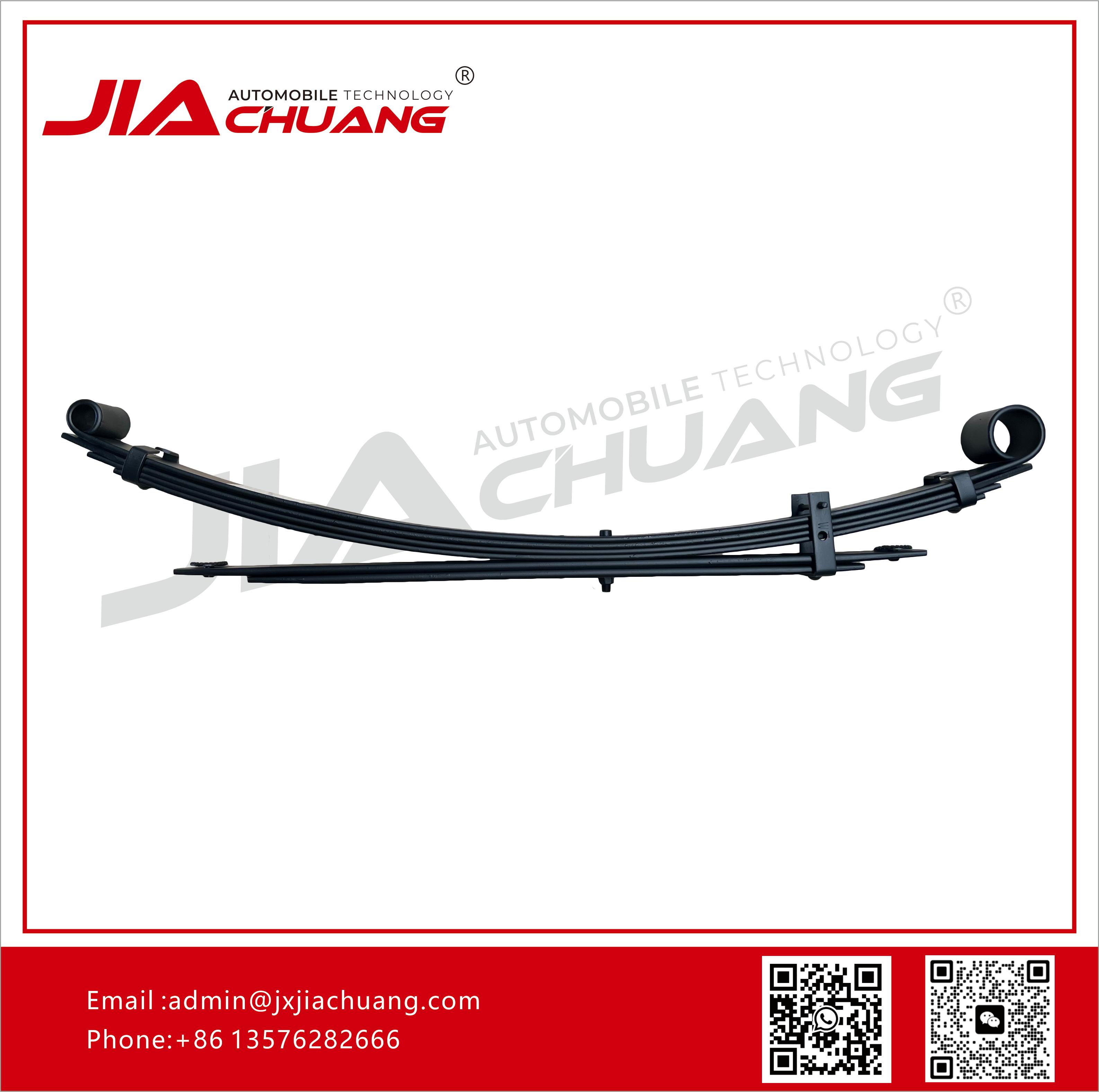
A leaf spring operates under repeated bending loads as the vehicle travels over uneven roads, carries different payloads, and experiences dynamic changes in suspension forces. If the spring develops permanent deformation, fatigue cracks, or dimensional deviations, the vehicle's rear suspension performance may deteriorate. Understanding the engineering requirements behind this component helps ensure reliable replacement and reduces the risk of premature suspension failure.
Understanding the Function of a Rear Axle Leaf Spring
A rear axle leaf spring is a flexible suspension element generally manufactured from high-strength spring steel. Its primary functions are to support the vehicle's static load, absorb dynamic forces, and help maintain the correct relationship between the axle and vehicle frame.
When a vehicle carries cargo or encounters road irregularities, the rear suspension experiences changing vertical forces. The leaf spring bends under these forces and stores elastic energy. It then releases this energy as the load changes, helping control suspension movement and maintain tire contact with the road.
Depending on the suspension design, the leaf spring may also contribute to longitudinal axle positioning and resistance to axle wind-up during acceleration and braking.
Unlike coil springs, which use a helical structure, leaf springs distribute bending stress along one or more curved steel plates. A multi-leaf spring assembly typically consists of a main leaf, supporting leaves, a center bolt, and mounting hardware. The main leaf commonly includes rolled eyes at both ends for connection to the suspension system.
For a replacement component such as the 55100-4F100 rear axle leaf spring, matching the original spring configuration is essential. Differences in leaf length, arch height, thickness, mounting dimensions, or spring rate may affect installation and suspension behavior.
Critical Specifications for 55100-4F100 Rear Axle Leaf Spring Replacement
Part number verification is the first step when sourcing a replacement leaf spring. However, a matching reference number should be supported by vehicle application and dimensional confirmation. Buyers should verify the applicable vehicle model, production year, rear suspension configuration, and any relevant chassis variations.
Several technical dimensions deserve particular attention.
Overall length and eye-to-eye distance: These dimensions determine whether the spring can connect correctly to the existing suspension mounting points. Incorrect dimensions may create installation difficulties or alter suspension geometry.
Free arch height: This refers to the spring's unloaded curvature. It is an important indicator of the spring's geometric condition and influences the installed suspension position. A different arch height may affect vehicle ride height and available suspension travel.
Leaf thickness and width: These parameters influence bending stiffness and stress distribution. Even relatively small dimensional changes can affect spring performance when combined with different material properties.
Eye diameter and bushing compatibility: The spring eyes must match the required mounting hardware and bushing arrangement. Incorrect fitment can cause excessive movement, installation stress, or accelerated bushing wear.
Spring configuration: The number of leaves, individual leaf dimensions, and assembly structure should correspond to the intended suspension design.
The spring rate and load characteristics are equally important. A replacement spring that is too soft may allow excessive rear suspension deflection under load, while an excessively stiff spring may reduce ride comfort and change the vehicle's dynamic response.
For this reason, dimensional matching should be combined with performance verification rather than treated as the only acceptance criterion.
Spring Steel Selection and Heat Treatment
Material quality is one of the most important factors determining the durability of a rear axle leaf spring. Leaf springs operate under repeated stress cycles, making fatigue resistance and elastic recovery essential material characteristics.
Automotive leaf springs are commonly manufactured from alloy spring steels such as 60Si2Mn, 55CrMnA, and 51CrV4, depending on design requirements and applicable standards. These materials are selected for their strength, hardenability, and ability to maintain suitable mechanical properties after heat treatment.
The manufacturing process generally includes steel cutting, heating, forming, quenching, tempering, and subsequent finishing operations. Heat treatment must establish an appropriate balance between hardness, tensile strength, toughness, and fatigue performance.
Insufficient hardening may result in inadequate strength under repeated loading. Excessive hardness or unsuitable tempering conditions may increase brittleness and the risk of cracking. Therefore, hardness should be controlled according to the material specification and component design rather than maximized without consideration of toughness.
Surface condition also matters. Scratches, sharp edges, corrosion pits, and other surface defects can act as stress concentration points and contribute to fatigue crack initiation. Shot peening, when specified by the engineering design, can introduce beneficial compressive residual stress at the surface and improve fatigue performance.
Manufacturing Precision and Quality Control
Consistent manufacturing is essential for maintaining predictable spring performance across production batches. Variations in forming geometry, heat treatment, or assembly dimensions may lead to differences in free arch height, spring rate, and load distribution.
A professional leaf spring production process should include inspection at multiple stages. Incoming steel materials should be checked against the specified grade and dimensional requirements. During forming, the spring profile and leaf geometry should be monitored to maintain consistency.
Heat treatment requires controlled process conditions, including heating temperature, holding time, quenching conditions, and tempering parameters. Finished springs should undergo dimensional inspection and appropriate mechanical testing.
Depending on the product specification, quality verification may include:
-
Material composition and mechanical property testing.
-
Hardness testing after heat treatment.
-
Free arch height and dimensional inspection.
-
Load-deflection testing to verify spring characteristics.
-
Fatigue testing to evaluate repeated loading performance.
-
Surface inspection for cracks, corrosion, and manufacturing defects.
These controls help identify production deviations before the components enter the distribution or installation process.
Common Signs of Rear Leaf Spring Failure
Understanding typical failure symptoms helps determine when a 55100-4F100 rear axle leaf spring may require replacement.
One common indication is a noticeable reduction in rear ride height. If the vehicle sits lower than its normal position, the spring may have experienced permanent deformation or fatigue-related loss of stiffness.
Uneven rear suspension height may indicate a difference in spring condition between the left and right sides. Visible cracks, broken leaves, damaged spring eyes, or excessive corrosion are additional warning signs.
Unusual noises during acceleration, braking, or travel over uneven surfaces may also indicate problems involving leaf contact, mounting hardware, or bushings. However, these symptoms are not exclusive to leaf spring failure and should be confirmed through a complete suspension inspection.
When replacement is necessary, the correct part specification and installation procedure should be followed. Mounting bolts, U-bolts, bushings, and related hardware should also be inspected because worn or incorrectly installed components can compromise the performance of a new spring.
Choosing a Reliable 55100-4F100 Rear Axle Leaf Spring Manufacturer
A dependable replacement leaf spring requires a combination of correct application matching, material control, manufacturing precision, and consistent quality management.
JIANGXI JIACHUANG AUTOMOBILE TECHNOLOGY CO., LTD. has more than 18 years of experience in automotive parts manufacturing, specializing in leaf springs, bushings, and U-bolts. The company operates three factories across Hunan and Jiangxi provinces, with production lines equipped with automated manufacturing machinery.
Its manufacturing and quality management systems are supported by ISO 9001:2015 and IATF 16949 certification. Experienced engineering personnel provide technical support for product specifications and customer requirements, while its export network serves markets across Europe, North America, South America, the Middle East, Africa, and Asia.
For the 55100-4F100 rear axle leaf spring, product evaluation should include part number verification, vehicle application confirmation, dimensional inspection, material specifications, and load-performance requirements. These checks help ensure that the replacement component is compatible with the intended suspension system.
Ultimately, a reliable rear axle leaf spring is not defined by its external appearance alone. Material properties, heat treatment, fatigue resistance, and dimensional consistency determine how effectively it performs throughout its service life. Choosing a manufacturer with established production capabilities and quality control procedures provides a stronger foundation for dependable replacement parts and long-term supply cooperation.
http://www.jxjiachuang.com
JIANGXI JIACHUANG AUTOMOBILE TECHNOLOGY CO.,LTD -
-
AuthorPosts

- You must be logged in to reply to this topic.