- This topic is empty.
-
AuthorPosts
-
27/11/2026 at 16:52 #153288
A 6kV YKK high voltage motor is typically selected for industrial equipment where high power, continuous operation, and dependable electrical performance are more important than compact low-voltage drive systems. In applications such as pumps, fans, compressors, conveyors, crushers, and large mechanical processing equipment, the motor must be evaluated as part of the complete drive system rather than as an isolated electrical component. Rated voltage, output power, starting characteristics, efficiency, enclosure design, cooling, bearing configuration, and site conditions all influence whether the motor will deliver stable operation over its intended service life.
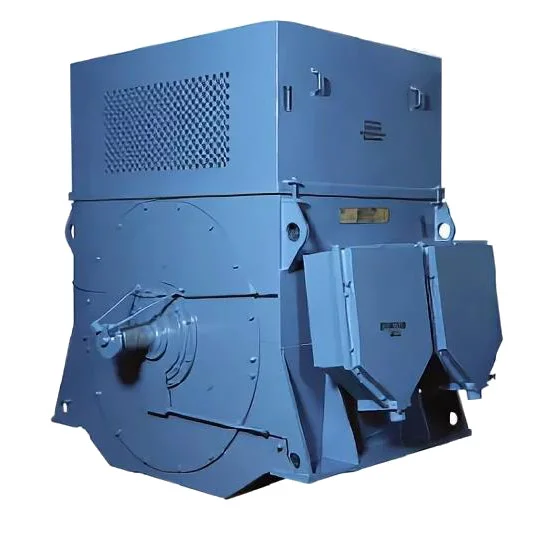
For a 6kV system, the YKK motor configuration is particularly relevant when the installation requires a high-voltage squirrel-cage induction motor with an air-to-air cooling arrangement. Compared with a low-voltage motor delivering the same power, the higher operating voltage allows the motor to carry lower line current, which can reduce conductor size and influence the design of the upstream electrical system.
Why 6kV is used for high-power motor applications
The relationship between three-phase motor power and line current can be approximated by:
I ≈ P / (√3 × U × η × cosφ)
where P is output power, U is line voltage, η is efficiency, and cosφ is power factor.
For example, assuming a 1,000 kW motor with an efficiency of 95% and power factor of 0.90, the approximate full-load current at 6kV is:
I ≈ 1,000,000 / (1.732 × 6,000 × 0.95 × 0.90) ≈ 113 A
At 400V under the same assumed efficiency and power factor, the current would be approximately 1,690 A.
This difference has practical consequences. High-voltage operation can reduce current-related losses in the supply conductors and make high-power transmission more manageable. It also affects switchgear selection, cable design, transformer capacity, motor protection, and starting arrangements.
Therefore, specifying a 6kV YKK high voltage motor should begin with the complete electrical architecture rather than simply matching the motor's rated power.
What the YKK construction means in practice
YKK generally refers to a high-voltage three-phase asynchronous motor with a squirrel-cage rotor and an air-to-air cooler. The cooling arrangement is important because high-power motors continuously generate heat through stator copper losses, rotor losses, core losses, mechanical losses, and additional stray-load losses.
The cooling system transfers internal motor heat to the surrounding environment through a heat exchanger. This allows the motor to maintain an appropriate winding and bearing temperature under continuous operating conditions.
For a continuous-duty application, the thermal design should be evaluated against the actual operating profile rather than only the nameplate output. A motor operating at 90–100% load continuously has a different thermal requirement from a motor operating at 50–70% load with occasional peak demand.
Ambient temperature also matters. A motor specified for a standard ambient condition may require different thermal consideration when installed in a hot production area, poorly ventilated equipment room, or high-altitude location.
Rated power should be matched to the driven equipment
Oversizing a motor does not automatically improve system reliability. An oversized motor may operate significantly below its optimal load range, affecting efficiency and power factor, while an undersized motor can experience excessive thermal loading during continuous operation.
The correct approach is to compare the motor's rated output with the actual shaft power requirement of the driven machine.
For a centrifugal pump, for example, operating conditions such as flow, head, fluid density, pump efficiency, and system resistance determine the required shaft power. For a fan, airflow, pressure, gas density, and fan efficiency become important. For conveyors and crushers, starting torque and mechanical load characteristics may be more critical than steady-state power alone.
A practical specification therefore needs more than “6kV + power rating.” It should establish rated power, rated speed, duty cycle, load characteristics, starting method, operating environment, and required service conditions.
Speed and pole selection affect the mechanical system
The synchronous speed of an induction motor is determined by:
nₛ = 120f / p
At a 50 Hz supply, a 2-pole motor has a synchronous speed of 3,000 rpm, while a 4-pole motor has 1,500 rpm, a 6-pole motor has 1,000 rpm, and an 8-pole motor has 750 rpm. Actual motor speed is slightly lower because of slip.
This makes pole selection directly relevant to the driven equipment.
A high-speed motor may be appropriate for certain fans or compressors, while a lower-speed motor can reduce the need for mechanical speed reduction in other applications. Eliminating or reducing a gearbox can simplify the drivetrain, but the motor itself may become larger and heavier.
For this reason, motor speed should be evaluated together with coupling design, gearbox ratio, shaft torque, vibration requirements, and equipment operating point.
Starting performance deserves special attention
Large high-voltage motors can create substantial starting current when connected directly to the supply. The starting method must therefore be coordinated with the motor, transformer, switchgear, and driven machine.
Direct-on-line starting provides a relatively simple electrical arrangement but can produce high inrush current and voltage disturbance. Depending on the load and grid capacity, reduced-voltage starting or other starting solutions may be considered.
Starting torque is equally important. A pump with a relatively low starting load behaves differently from a heavily loaded conveyor, compressor, or crusher.
The motor specification should therefore identify:
-
Starting method
-
Starting current
-
Starting torque
-
Load inertia
-
Acceleration time
-
Permitted voltage drop
-
Number of starts per hour
-
Electrical network short-circuit capacity
These parameters help determine whether the selected 6kV YKK high voltage motor can accelerate the equipment reliably without creating unacceptable electrical or mechanical stress.
Insulation and high-voltage electrical reliability
At 6kV, insulation performance becomes a central part of motor reliability. The stator winding system must withstand normal operating voltage as well as electrical, thermal, and mechanical stresses generated during starting and long-term operation.
For demanding industrial installations, winding insulation should be considered together with surge protection, switching conditions, ambient temperature, contamination, humidity, and maintenance practices.
Partial discharge behavior can also become relevant when evaluating high-voltage insulation systems, particularly for large motors and critical applications. The objective is not simply to achieve an acceptable insulation test result during factory inspection, but to maintain insulation integrity throughout the motor's operating environment.
This is why complete electrical testing and traceable manufacturing control are important when sourcing a high-voltage motor.
Bearings, vibration, and mechanical alignment
Electrical performance alone cannot guarantee reliable operation. A large motor transfers substantial mechanical forces through its bearings and shaft system, making alignment and vibration control essential.
Bearing selection should correspond to rotor weight, radial and axial loads, operating speed, coupling arrangement, and lubrication requirements. Excessive vibration may originate from rotor imbalance, misalignment, bearing problems, foundation issues, or coupling conditions.
For a motor-driven pump, for example, shaft alignment between the motor and pump must be controlled during installation. Even a well-manufactured motor can experience premature bearing or coupling problems if the foundation and alignment are poorly managed.
Factory balancing, dimensional inspection, bearing inspection, and vibration testing therefore form an important part of the overall quality evaluation.
Selecting a manufacturer for a 6kV YKK high voltage motor
For high-power equipment, supplier evaluation should extend beyond the motor catalog. Manufacturing capability, testing equipment, quality control, customization support, and after-sales technical service can directly affect project execution.
WUXI JINDA MOTOR CO., LTD. manufactures YKK and YXKK series high-voltage, high-efficiency motors alongside YE/YE3/YE4/YE5 high-efficiency three-phase induction motors, explosion-proof motors, and specialized industrial motors. The company describes its production facilities as having advanced equipment and complete testing methods, with a focus on stable product quality.
This broader motor manufacturing experience can be relevant when a project requires different motor types across pumps, fans, lifting equipment, metallurgical machinery, or other industrial systems. JINDIAO-branded products also include a long-established range of conical rotor and hoisting motors for crane and metallurgical applications.
For a high-voltage motor project, the supplier should be able to provide the technical documentation required to verify the motor against the complete system specification, including rated voltage, output, speed, efficiency, power factor, starting characteristics, enclosure/cooling configuration, insulation system, bearings, dimensions, weight, and applicable testing requirements.
A practical specification approach
The most reliable way to select a 6kV YKK high voltage motor is to work backward from the driven equipment. Establish the mechanical load first, then determine rated power and speed. After that, verify the 6kV electrical system, starting method, transformer and switchgear capacity, cable arrangement, cooling conditions, environmental requirements, and protection scheme.
For continuous industrial operation, the final selection should also consider efficiency and lifecycle cost rather than purchase price alone. A relatively small improvement in efficiency can become significant when a motor operates thousands of hours per year.
For example, a 1,000 kW motor operating 8,000 hours annually consumes approximately 8 million kWh of electrical energy at full rated output before accounting for efficiency losses. This illustrates why motor efficiency, load factor, operating hours, and maintenance requirements should be considered together when evaluating a high-voltage motor.
A properly specified 6kV YKK high voltage motor is ultimately a combination of electrical, thermal, mechanical, and application-level engineering. With appropriate power and speed selection, starting coordination, insulation reliability, cooling capacity, bearing design, and manufacturing quality, the motor can provide a practical high-voltage drive solution for demanding continuous-duty industrial equipment.
http://www.jindamotorcn.com
WUXI JINDA MOTOR CO., LTD. -
-
AuthorPosts

- You must be logged in to reply to this topic.