- This topic is empty.
-
AuthorPosts
-
09/11/2026 at 13:56 #153067
Seafood processing involves some of the most demanding conditions in the food manufacturing industry. From fish filleting and shrimp processing to freezing, portioning, and retail packaging, production lines frequently operate in environments with high humidity, water splashes, ice, and food residue. Equipment must withstand these conditions while maintaining stable performance and supporting strict hygiene requirements.
Weight control is an important part of seafood packaging. Whether a manufacturer packs frozen shrimp, fresh fish fillets, squid, shellfish, or processed seafood products, each package needs to meet its specified weight requirements. Inaccurate weighing can lead to product giveaway, underweight packages, unnecessary rework, and customer complaints.
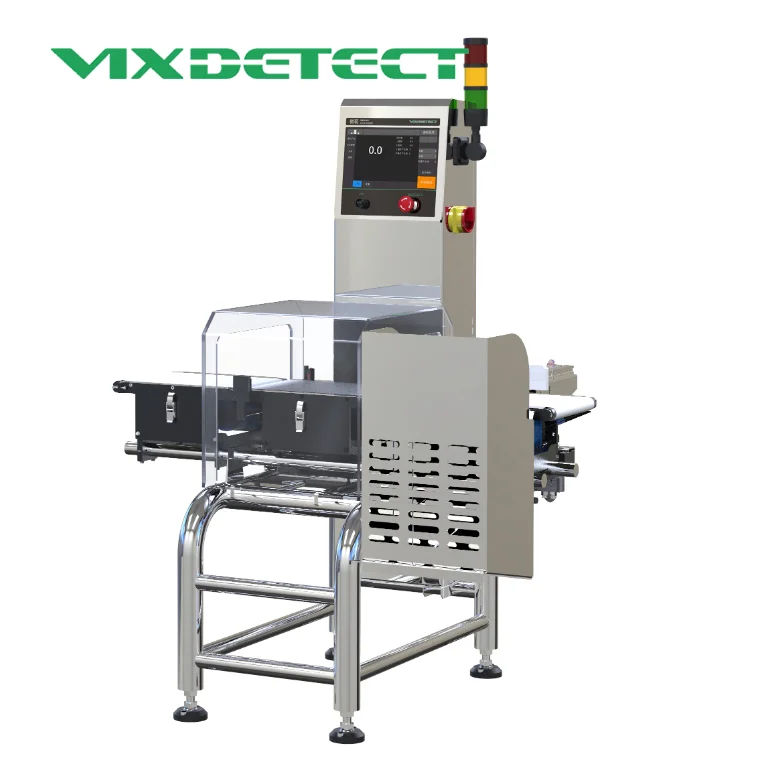
A standard checkweigher may not provide sufficient protection for equipment installed in wet processing environments. A waterproof food checkweigher is designed to offer additional protection against water and moisture entering sensitive components, making it a practical choice for seafood production lines where cleaning and moisture exposure are part of daily operations.
However, waterproof protection is only one consideration. Manufacturers also need to evaluate weighing accuracy, conveyor stability, cleaning requirements, corrosion resistance, and production speed. This article explains why seafood processing lines need a waterproof checkweigher and what buyers should consider when selecting one.
1. Seafood Processing Environments Expose Equipment to Water and Moisture
Unlike many dry food manufacturing applications, seafood processing involves continuous contact with water. Fish and shellfish may be washed several times before entering cutting, sorting, weighing, and packaging stages. Water can also come from ice, thawing processes, rinsing operations, and routine equipment cleaning.
These conditions create several challenges for weighing equipment.
Water Splashes During Production
During seafood washing, filleting, and portioning, water may splash onto nearby conveyors, machine surfaces, and electrical enclosures. Even when a checkweigher is not directly involved in washing, its position within the production line may expose it to surrounding moisture.
If water reaches sensitive electrical components, it may contribute to corrosion, electrical faults, or unstable equipment operation. A waterproof food checkweigher with an appropriate ingress protection rating helps reduce the risk of water entering protected enclosures.
Manufacturers should evaluate the actual moisture exposure around the installation area rather than choosing equipment based only on general descriptions such as water-resistant or waterproof.
High Humidity and Condensation
Seafood facilities often maintain humid conditions to support processing and product handling requirements. Temperature differences between chilled products, cold rooms, and surrounding air can also cause condensation.
Moisture may accumulate on machine surfaces, cable connections, and other components. Over time, repeated exposure can affect equipment reliability if the protection design is unsuitable.
A properly configured waterproof checkweigher helps protect sensitive parts from water ingress. The machine should also be suitable for the temperature and humidity conditions of the specific production area.
Ice and Meltwater
Frozen seafood processing introduces another source of moisture. Ice particles may accumulate on conveyor belts, product surfaces, and surrounding equipment. When ice melts, water can spread to areas that are not normally exposed to direct washing.
For this reason, manufacturers processing frozen fish, shrimp, or shellfish should consider both waterproof protection and the equipment's ability to operate under low-temperature conditions.
2. Frequent Cleaning Makes Waterproof Protection Essential
Hygiene is a major concern in seafood manufacturing. Fish, shrimp, squid, and other seafood products can leave behind protein residue, oils, scales, small particles, and other contaminants. These materials need to be removed through regular cleaning.
A checkweigher installed in a seafood processing facility must therefore be compatible with the site's cleaning procedures.
Supporting Routine Washdown Procedures
Many seafood production lines use water rinsing or washdown procedures to remove food residue from equipment surfaces. Depending on the facility, cleaning may involve low-pressure rinsing, water jets, detergents, or other approved cleaning methods.
A waterproof food checkweigher with an appropriate IP rating can provide better protection against water exposure during specified cleaning procedures.
However, manufacturers should not assume that every waterproof model can withstand high-pressure washing. The equipment's IP rating, construction, cleaning instructions, and permitted exposure conditions must all be checked before purchase.
Reducing Moisture-Related Equipment Problems
Repeated cleaning can place stress on seals, cable entries, connectors, and electrical enclosures. If these areas are poorly protected or become damaged, water may eventually enter the machine.
Choosing equipment designed for wet food processing environments can help reduce this risk. Manufacturers should also establish regular inspection procedures to check enclosure seals, cable connections, and other protective components.
Making Cleaning and Maintenance Easier
Waterproof protection does not automatically mean that a machine is easy to clean. Equipment design also matters.
A practical checkweigher should have an accessible structure that allows operators to remove food residue from relevant surfaces. Modular components can make certain parts easier to disassemble, inspect, reinstall, and maintain.
This is particularly useful in seafood facilities where cleaning frequency is high and production downtime needs to be controlled.
3. Different Seafood Products Require Accurate Weight Control
Seafood products vary considerably in size, shape, density, and packaging format. A checkweigher must be configured to handle these differences while maintaining consistent measurement performance.
Fresh Fish Fillets
Fish fillets may differ in length, thickness, and weight depending on the species and cutting process. Some products are packed individually, while others are grouped into trays or bags.
A checkweigher needs to accommodate the expected weight range and product dimensions. Conveyor movement should also be stable enough to prevent fillets from shifting during measurement.
Shrimp and Prawns
Shrimp and prawns are commonly packed in different formats, including retail bags, frozen blocks, and bulk packages. Individual shrimp may vary in size, but the final package generally needs to meet a specified net weight.
A waterproof checkweigher can help verify package weights after filling and sealing. For high-volume shrimp packaging lines, weighing speed and product spacing are particularly important.
Squid, Octopus, and Shellfish
Squid, octopus, clams, mussels, and other seafood products may have irregular shapes and varying moisture content. Their packaging formats also differ depending on whether they are sold fresh, frozen, or processed.
The checkweigher should be evaluated using actual product samples whenever possible. This helps manufacturers confirm whether the conveyor design, weighing range, and operating speed are suitable for the products being processed.
Frozen Seafood Packages
Frozen seafood is often packed in sealed bags, cartons, trays, or vacuum packaging. Surface ice and condensation may affect product handling and the surrounding equipment environment.
For these applications, manufacturers should consider low-temperature operating requirements alongside waterproof protection. The weighing system should be tested under conditions that reflect the actual production process.
4. A Waterproof Food Checkweigher Helps Maintain Stable Weighing Performance
Waterproof protection is important, but the primary function of a checkweigher remains accurate and consistent weight measurement.
In seafood production, weight variations may result from differences in product size, portioning, filling, or packaging. A reliable checkweigher helps identify packages that fall outside the configured weight limits.
Reducing Product Giveaway
Product giveaway occurs when manufacturers consistently pack more product than the declared target weight to avoid underweight packages.
For seafood products with relatively high raw material costs, even small weight differences across thousands of packages can result in significant material losses.
A properly configured checkweigher can identify weight deviations and provide information that helps production teams improve filling and portioning control.
For example, if shrimp packages consistently exceed the target weight, operators can review the upstream filling process and make appropriate adjustments.
Identifying Underweight Packages
Underweight packages can create compliance concerns, customer dissatisfaction, and additional handling costs.
A checkweigher can automatically compare each package against preset weight limits. Products outside the acceptable range can then be identified or rejected according to the production line configuration.
This supports more consistent weight control and helps manufacturers maintain packaging quality.
Maintaining Consistent Performance in Wet Environments
Moisture exposure can affect weighing stability if sensitive components are not adequately protected. Selecting a suitable waterproof food checkweigher helps reduce one potential source of equipment-related problems.
Nevertheless, accurate weighing also depends on load cell performance, conveyor vibration, product spacing, calibration, and proper installation. Waterproof construction should therefore be considered part of an overall equipment selection process rather than a substitute for good weighing system design.
5. IP Ratings: What Level of Waterproof Protection Do Seafood Manufacturers Need?
When comparing waterproof food checkweighers, manufacturers should understand the meaning of IP ratings. These ratings are defined under IEC 60529 and describe the protection provided by an enclosure against solid particles and water.
The first digit indicates protection against solid objects, while the second digit represents protection against water.
For seafood processing, the water protection level is particularly important because equipment may be exposed to splashing, rinsing, or more intensive washdown procedures.
IP65: Protection Against Water Jets
IP65-rated equipment is dust-tight and protected against water jets under standardized test conditions.
This rating may be suitable for certain seafood packaging areas where equipment experiences water splashes or controlled rinsing but is not exposed to more demanding water-jet cleaning.
Manufacturers should confirm that the cleaning method used in their facility falls within the equipment's specified limits.
IP66: Protection Against Powerful Water Jets
IP66 provides dust-tight protection and resistance to more powerful water jets than IP65.
It may be considered for seafood processing areas where cleaning involves stronger water sprays. However, actual suitability depends on factors such as water pressure, temperature, nozzle distance, and cleaning duration.
IP67: Protection Against Temporary Immersion
IP67-rated enclosures are dust-tight and protected against temporary immersion under specified test conditions.
This rating may be useful where a higher level of water ingress protection is required. However, IP67 does not automatically mean that the equipment is suitable for high-pressure water-jet cleaning. Immersion and water-jet protection involve different tests.
How Should Seafood Manufacturers Choose?
The appropriate IP rating depends on the actual working environment.
Seafood processing environment
Key considerations
Dry seafood packaging area
Occasional splashes and general moisture exposure
Wet fish processing area
Frequent water splashes and routine cleaning
Shrimp and shellfish processing
High humidity, water exposure, and food residue
Frozen seafood packaging
Condensation, ice, and low-temperature operation
Intensive washdown area
Stronger cleaning exposure and enclosure protection
Manufacturers should ask suppliers for technical documentation and clarify which components are covered by the stated IP rating. They should also confirm whether the complete machine or only certain enclosures have been tested.
6. Stainless Steel Construction Helps With Seafood Processing Requirements
Material selection is another important consideration for equipment installed in wet seafood processing environments.
Stainless steel is commonly used in food processing machinery because it offers good corrosion resistance, structural strength, and convenient cleaning properties.
Seafood production areas may expose equipment to water, salt-containing residue, and cleaning chemicals. Under unsuitable conditions, these factors can contribute to corrosion or surface deterioration.
A checkweigher with an appropriate stainless steel structure can provide a more suitable foundation for these environments. However, manufacturers should also consider the grade of stainless steel, surface finish, fasteners, joints, and other exposed components.
It is equally important to inspect areas where water or food residue may accumulate. A well-designed structure should support routine cleaning and reduce unnecessary inaccessible spaces.
7. Conveyor Design and Product Spacing Affect Weighing Accuracy
Seafood products are not always easy to transport consistently. Wet surfaces may cause packages to slide, while irregular product shapes can create unstable movement across the conveyor.
These conditions may influence the accuracy of weight measurements.
Stable Product Transportation
The conveyor should move products smoothly through the weighing section. Excessive vibration, sudden acceleration, or unstable transfer points can interfere with measurement.
Manufacturers should evaluate conveyor belt material, width, length, and transfer design according to their seafood packaging format.
Appropriate Product Spacing
Each package needs enough space to be weighed separately. If two packages overlap or arrive too closely together, the checkweigher may not be able to distinguish their individual weights correctly.
This is especially important for high-speed seafood packaging lines where many products pass through the system every minute.
Compatibility With Different Package Formats
Seafood products may be packed in flexible bags, rigid trays, cartons, or vacuum-sealed packages. Each format has different dimensions and handling characteristics.
A checkweigher should be configured according to the actual package specifications. Manufacturers handling multiple product types should also consider whether the machine can support convenient product changeovers.
8. High-Speed Operation Supports Seafood Production Efficiency
Many seafood manufacturers operate automated production lines to process large volumes of products within limited production windows.
The checkweigher must therefore keep pace with upstream packaging equipment without sacrificing the required weighing accuracy.
When evaluating equipment speed, manufacturers should consider more than the maximum rated throughput. Product size, weight range, conveyor spacing, and weighing accuracy all affect actual performance.
A waterproof food checkweigher with high-speed sampling control can support efficient weight measurement by capturing product weight data quickly. The system should also provide clear operating information so that operators can identify abnormal readings and respond to production issues.
For facilities handling different seafood products, preset product parameters can simplify changeovers. Operators can select the corresponding settings rather than repeatedly entering all product specifications manually.
Conclusion
Seafood processing lines need reliable weighing equipment that can operate in environments characterized by water splashes, high humidity, frequent cleaning, and temperature changes. A waterproof food checkweigher helps protect sensitive components against moisture ingress while supporting accurate package weight inspection throughout seafood production.
However, waterproof protection should not be evaluated in isolation. Manufacturers also need to consider IP ratings, stainless steel construction, load cell protection, conveyor stability, product spacing, weighing speed, and maintenance requirements. Matching these features to the actual processing environment helps reduce equipment-related interruptions and maintain consistent packaging quality.
For seafood manufacturers looking for a practical weighing solution, Vixdetect offers checkweigher configurations with optional IP65–IP67 waterproof protection. Its high-speed sampling control is designed to support fast and accurate weighing, while the 10-inch colour touchscreen and user-friendly human-machine interface make daily operation more convenient. The equipment can operate independently and be ready for use within three minutes. Multiple product presets allow operators to switch between different seafood product specifications quickly, while the robust stainless steel structure provides a solid foundation for food processing applications. In addition, its modular design simplifies disassembly, installation, maintenance, and cleaning. By evaluating the appropriate waterproof configuration alongside product characteristics and production requirements, seafood processors can determine whether a Vixdetect checkweigher is a suitable fit for their weighing and quality control processes.
http://www.vixdetect.net
vixdetect -
AuthorPosts

- You must be logged in to reply to this topic.