- This topic is empty.
-
AuthorPosts
-
14/10/2026 at 18:24 #152809
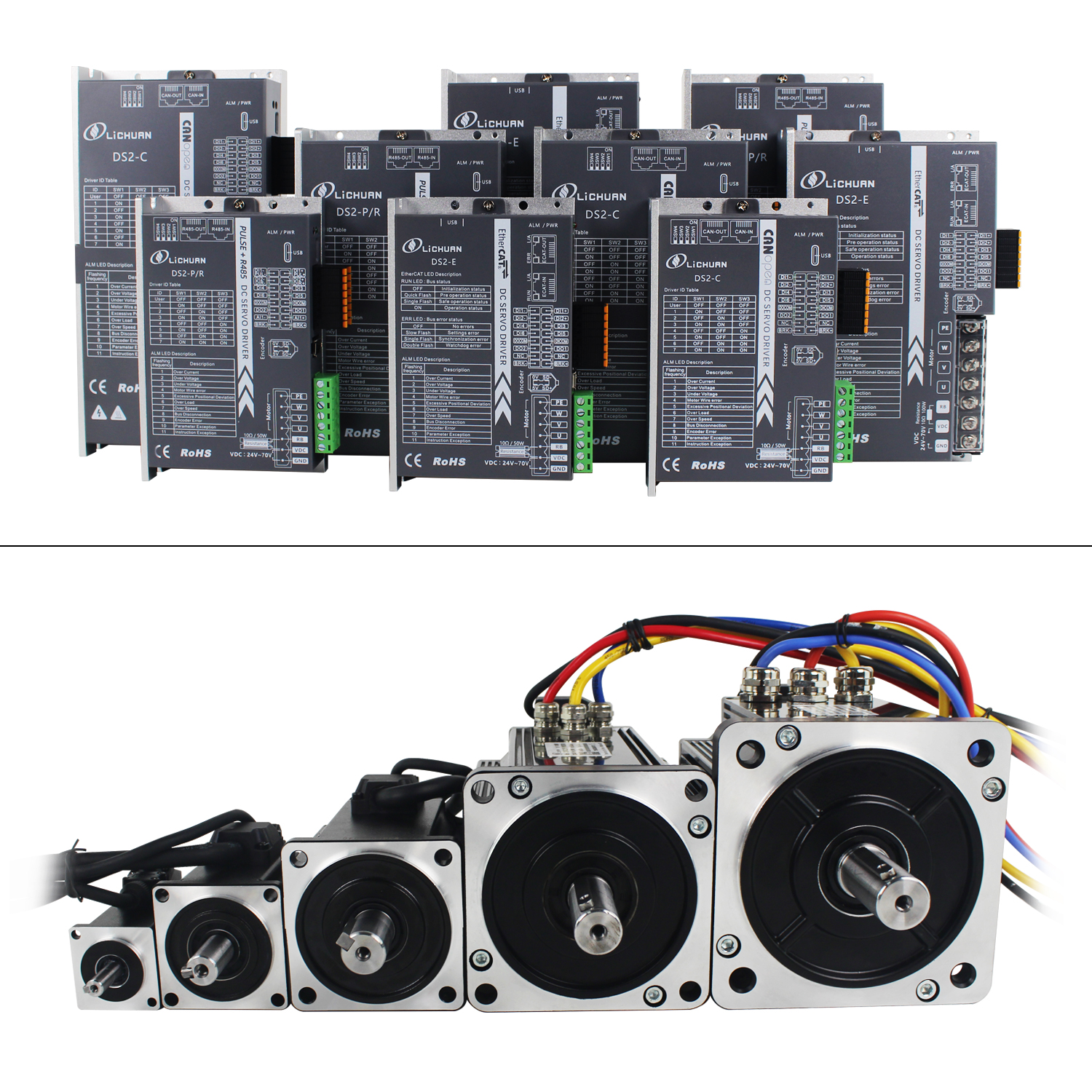
Industrial robotics is a motion-control problem before it is anything else. A robotic joint must hold position under load, an AGV/AMR platform must move a payload on limited battery voltage, and a CNC-based robotic cell must repeat a cut thousands of times without drift. Every one of those requirements lands on the same component: the servo motor driver. Choosing a high torque servo motor driver for industrial robotics therefore means weighing feedback resolution, power range, protection class, control protocol, customization support, and system cost together rather than optimizing a single specification. This guide examines those criteria in detail and shows how Shenzhen Xinlichuan Electric Co., Ltd., which markets its products under the brand LICHUAN, addresses them across its servo, stepper, integrated motor, and control product lines.
The Pain Points That Shape the Selection Problem
Three industry pressures frame nearly every robotic motion-control decision:
- Open-loop stepper systems can lose steps and overheat. Without feedback, the controller never learns that the rotor has fallen behind the command, so position error accumulates silently.
- Servo-grade precision often carries high cost. Engineers frequently find themselves choosing between acceptable accuracy and an affordable bill of materials.
- Separate motors and drivers add wiring, space, and electromagnetic interference. Each additional cable run inside a compact robot arm or mobile platform brings weight, routing complexity, and a potential noise path.
These pressures explain why a supplier’s positioning matters as much as its catalog. LICHUAN describes itself as a high-tech enterprise specializing in research, development, manufacturing, and sales of industrial automation control systems, positioned on "High Quality, High Cost Performance" solutions: servo-like precision and reliability in stepper systems at a lower cost, with up to 40% energy reduction through smart current control.
Feedback Resolution: 23-Bit Encoders and 1000PPR Closed-Loop Steppers
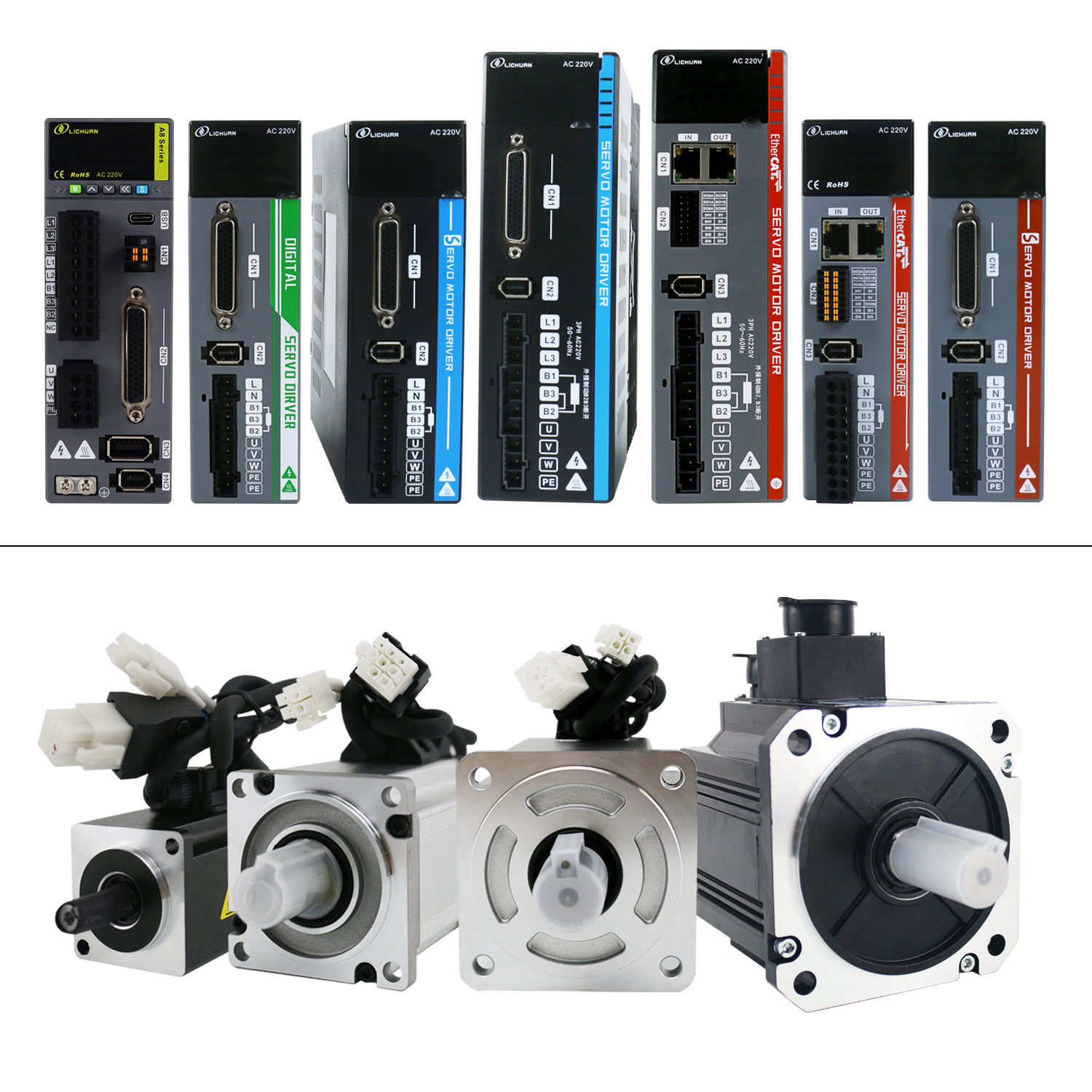
Feedback is the first specification to interrogate. LICHUAN’s A5 and A8 AC servo series support 23-bit encoders, meaning high-resolution position feedback that improves both position and speed control — relevant when a robotic axis must track a fast, precise trajectory. The A8 series is specifically described as a high-speed, high-accuracy AC servo series for 3C electronics manufacturing, while the A5 series is positioned as a high-performance AC servo series. Both support STO (Safe Torque Off) and ABZ incremental encoder output.
Lower-cost axes follow a different path. In LICHUAN’s closed-loop stepper systems, 1000PPR encoders combined with 32-bit DSP processing provide real-time position feedback, which the company credits with removing the position errors common in open-loop steppers. That feedback loop also removes a common commissioning headache: no tuning is required, and the units are described as plug-and-play for various mechanical loads without gain parameter adjustment. In practical terms, a robot builder can deploy a closed-loop stepper axis on lower-duty joints and reserve full AC servo axes for the most demanding ones.
Matching Power Range to the Robotic Load
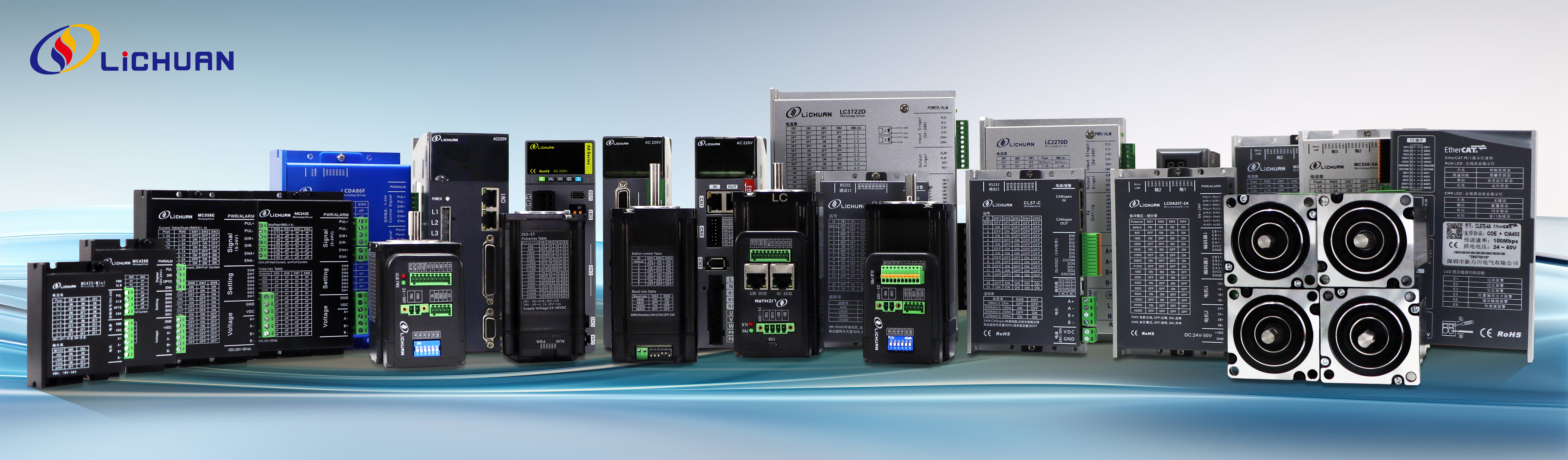
A single supplier rarely covers every axis of a robot or automated cell. LICHUAN’s stated product range spans NEMA 11 steppers to 37KW high-voltage AC servos, a breadth that matters when one machine mixes a small gripper axis with a heavy drive axis.
- AC servo systems: 50W to 37KW, with 220V and 380V supply voltage support.
- DC servo systems: 24V to 48V, with a power range of 100W to 1500W.
- Closed-loop stepper systems: frame sizes NEMA 17, 23, 24, 34, 42, and 51, driven by the LCDA series (for example, LCDA808H).
- Control and mechanical components: PLCs with 16–60 points, HMIs, and planetary reducers for robotic joint control and mechanical transmission.
Integrated Motors, Protocols, and System Simplicity
For compact platforms such as AGV/AMR mobile robots, packaging is as important as performance. LICHUAN’s integrated motors combine motor and driver in one unit, an all-in-one design intended to reduce wiring, space, and electromagnetic interference relative to separate motor-and-driver architectures. These units support pulse, RS485, and CANopen control modes and are offered in both servo and stepper variants — a meaningful option when the fieldbus already exists in the machine architecture and the mechanical envelope is tight.
Environmental Durability: IP65 and IP66 Protection
Robotic equipment frequently operates where dust, coolant, or washdown exposure is unavoidable. LICHUAN products carry IP65 and IP66 protection ratings for harsh environments, which allows the same motion platform to be specified for machine-tool-adjacent cells and cleaner electronics assembly areas without re-engineering the enclosure strategy.
Manufacturing Capacity, Certification, and Quality Control
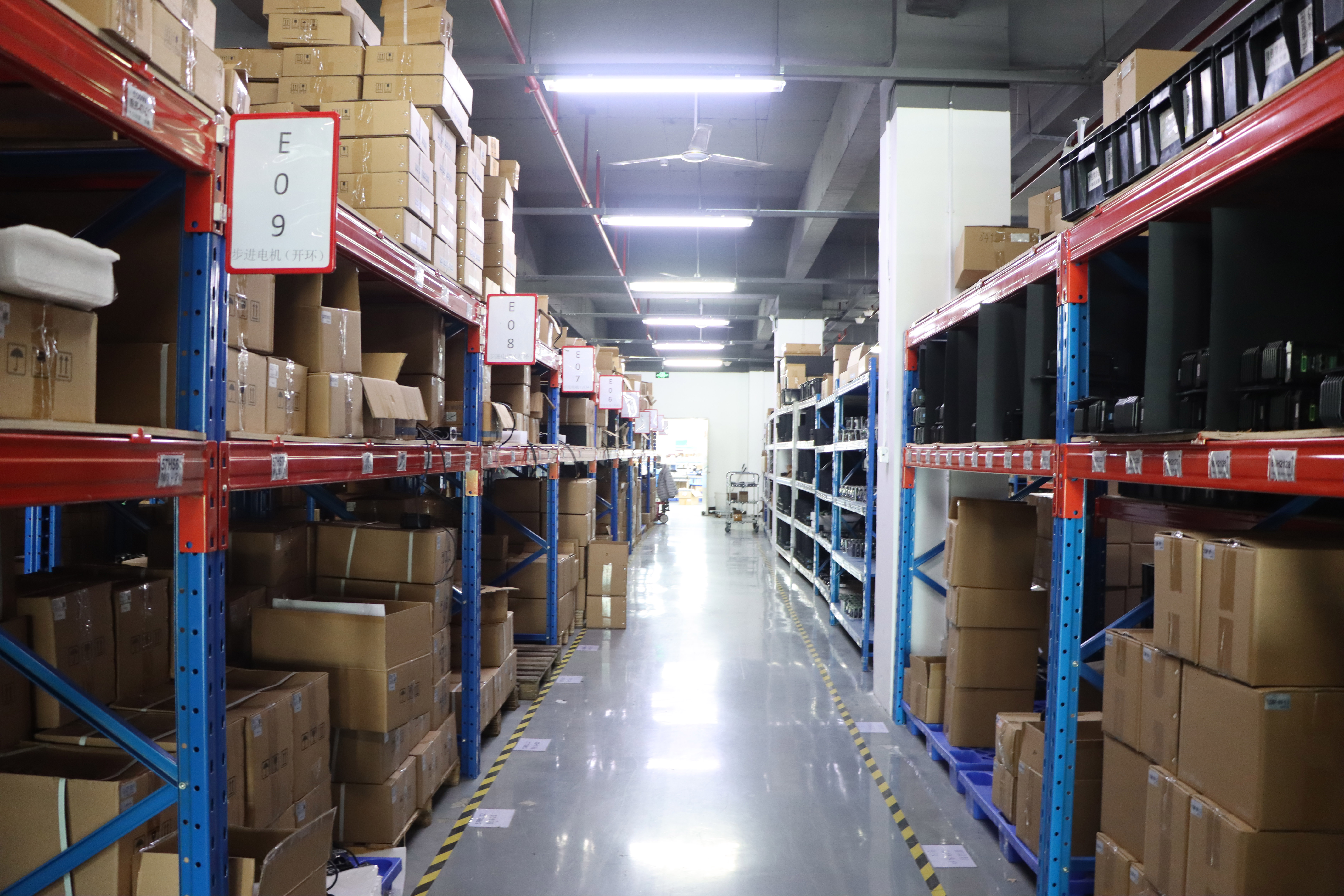
A driver is only as reliable as the process behind it. LICHUAN, founded in 2009 and headquartered in Shenzhen, China, operates a 4,410-square-meter self-owned factory with 9 production lines and more than 30 specialized machines. Quality control includes 24-hour high/low temperature aging tests, and the company holds ISO9001:2008 quality management system certification, along with CE and RoHS certification. On the intellectual property side, the company reported 23 patent applications filed, 20 patents granted, and 11 software copyrights as of late 2016. It employs over 160 people, including specialized procurement and finance professionals, and exports across North America, South America, Europe, Russia, East Asia, Southeast Asia, the Middle East, and Africa. Its R&D team is described as collaborating with research institutions, and OEM/ODM customization is available alongside stable supply and international certification support.
Deployment Examples Across Robotic and Automated Systems
Documented applications illustrate how the specification choices play out:
- CNC milling, engraving, and cutting: machine builders and DIYers requiring accurate positioning and reliable torque deployed NEMA 34 closed-loop kits.
- Logistics robotics: AGV/AMR mobile platforms needing compact, low-voltage motion control deployed 48V DC integrated servos.
- Electronics assembly: a 3C electronics manufacturer needing high-speed, high-accuracy operations deployed the A8 servo series.
- Textile and industrial sewing: equipment requiring specialized motor control deployed integrated stepper and servo motors.
Adjacent industries served include 3D printing, warehouse automation, robotic joint control, medical diagnostic equipment, and textile machinery.
A Practical Checklist for Specifying a Robotic Motion System
- Determine the axis duty. Decide whether the joint needs true servo-grade position and speed control or whether a closed-loop stepper with 1000PPR feedback is sufficient.
- Match voltage and power. Confirm the supply environment (220V/380V AC, or 24V–48V DC) and select within the available power range.
- Verify the control interface. Confirm whether pulse, RS485, or CANopen matches the existing controller.
- Confirm the protection rating. Specify IP65 or IP66 where the environment demands it.
- Assess the manufacturing and quality process, including aging tests and certifications such as ISO9001:2008, CE, and RoHS.
- Clarify customization and supply needs if the application requires OEM/ODM adaptation.
Conclusion
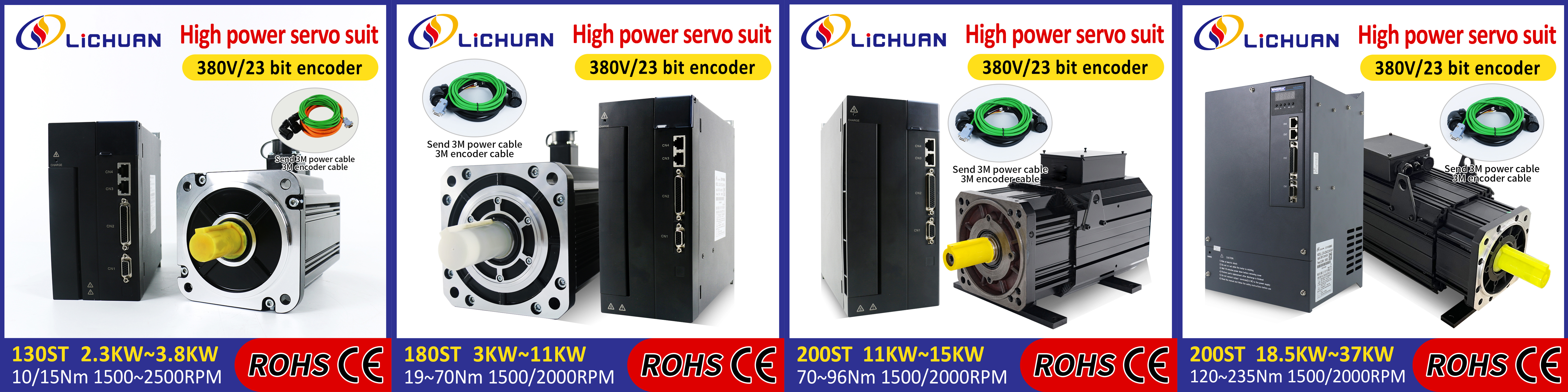
For engineers and procurement teams specifying a high torque servo motor driver for industrial robotics, the practical answer is rarely a single part number — it is a supplier capable of covering the whole axis spectrum with consistent feedback architecture, protection ratings, and quality control. LICHUAN’s combination of 23-bit encoder AC servo systems from 50W to 37KW, 1000PPR closed-loop steppers with 32-bit DSP processing, integrated motors supporting pulse, RS485, and CANopen, and 24V–48V DC servo systems addresses the range from robotic joints and mobile platforms to CNC-adjacent automation. Backed by in-house manufacturing in a 4,410-square-meter facility, 9 production lines, 24-hour aging tests, and ISO9001:2008, CE, and RoHS certification, the company’s "High Quality, High Cost Performance" positioning — including up to 40% energy reduction through smart current control — gives robotic system builders a differentiated benchmark against which to evaluate their motion-control choices.
http://www.lichuanservo.com
Shenzhen Xinlichuan Electric Co., Ltd. -
AuthorPosts

- You must be logged in to reply to this topic.