- This topic is empty.
-
AuthorPosts
-
29/09/2026 at 11:46 #152683
Industrial Drone Payloads Are Outpacing Propulsion Design
Industrial-grade unmanned aerial vehicles are being asked to carry more than ever before. Inspection missions now integrate LiDAR sensors, mapping platforms demand high-precision optics, and agricultural operations require full spraying systems mounted on the airframe. As payloads climb, three problems consistently surface: insufficient flight stability, low power system efficiency during high-intensity operations, and motor overheating under sustained load. For pilots flying complex shooting scenarios that require ample thrust reserves, these issues are not theoretical—they translate directly into shaky footage, shortened flight windows, and premature component wear.
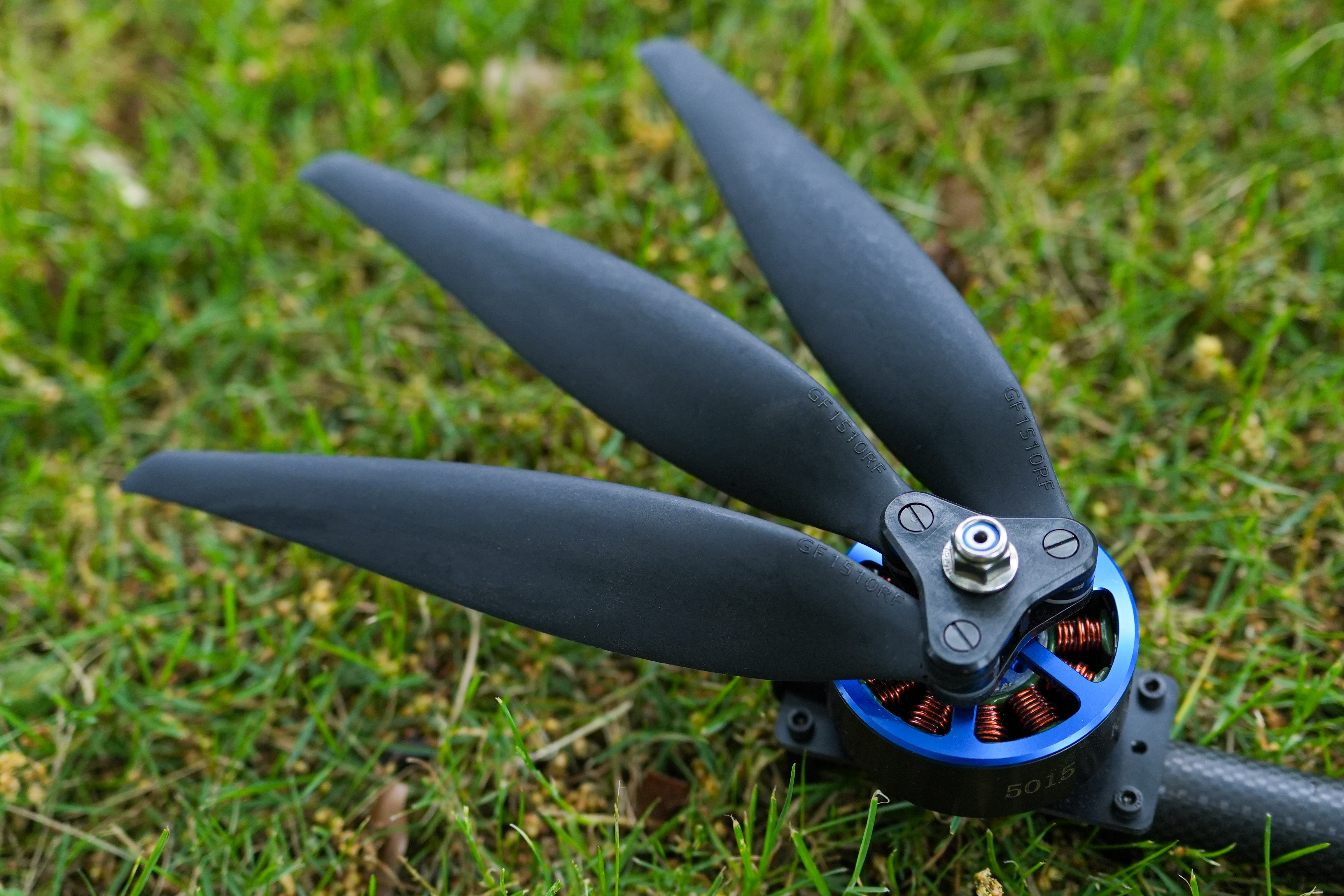
Ningbo Gemfan Hobby Co., Ltd., operating under the brand GEMFAN, has spent 15 years focused specifically on UAV propulsion system components. The company’s engineering teams bring years of experience in precision dynamic balance control and material application technologies, positioning GEMFAN to speak with technical authority on how propeller geometry, material selection, and manufacturing precision jointly determine flight performance under heavy-payload conditions. GEMFAN’s business coverage spans more than 60 countries and regions, including China, the USA, the UAE, Europe, and Australia, giving its engineering approach exposure to a wide range of operating environments and mission profiles.
Why Blade Count and Diameter Matter: The Engineering Logic Behind Macroquad Propellers
The core of GEMFAN’s Large Wheelbase 3-Blade UAV Propeller Series rests on a simple but rigorous principle: at a given RPM, a three-blade aerodynamic structure interacts with a larger volume of air per unit diameter than a traditional two-blade propeller, producing more stable thrust and reducing flight vibration. This is the necessity behind the three-blade design choice for macroquad platforms carrying heavy or sensitive payloads such as LiDAR units, multispectral cameras, or high-precision mapping equipment.
The principle logic extends to diameter and pitch selection. Larger-diameter blades push a greater mass of air at lower RPM, which reduces energy consumption per unit of thrust and extends operation time—an approach reflected across the series. The 16X8X3 model, with a 406.4mm (16-inch) diameter, 8-inch pitch, and single weight of 84.9g, is built for 650mm-class platforms with a 9-12kg takeoff weight, paired with 4720 500KV-class motors. The 17X8X3, at 431.8mm diameter and 100.5g single weight, targets 750mm-class platforms in the 10-12kg range with 5330-class motors, optimizing aerodynamic efficiency to reduce motor RPM, heat, and ESC load. The 18X10X3, with a 457.2mm diameter, 10-inch pitch, and 119.3g weight, combines an 18-inch diameter with a 10-inch pitch to deliver sufficient takeoff thrust for 850mm long-wheelbase missions carrying heavy equipment, paired with 5330-class motors for 11-13kg takeoff weight on 1300mm wheelbase platforms.
Further up the series, a 508mm-diameter, 10-inch pitch model weighing 170g—built with an 8mm center hole plus six-hole adapter ring—serves 1050mm long-wheelbase heavy-lift missions, pairing with 6215-class motors for 12-14kg takeoff weight on 1100mm wheelbase platforms. At the top of the range, the 22X10X3 uses a 558.8mm-diameter, carbon-fiber-reinforced nylon composite blade weighing 182g, engineered for 1200mm long-wheelbase platforms with 7218-class motors, supporting 16kg takeoff weight on 1200mm wheelbase airframes. The standard reference across the line is consistent: specifications spanning 16-22 inches are matched precisely to mainstream 800-1200mm wheelbase industrial platforms, with high-precision molds and dynamic balancing processes reducing high-frequency vibration to extend motor and flight controller lifespan.
Where This Technology Is Heading in Industrial UAV Operations
Several trends emerge from GEMFAN’s technical approach that carry implications beyond any single product. First, low-noise operation is increasingly tied to efficiency gains rather than treated as a separate design goal—lower operating RPM, made possible by larger-diameter three-blade designs, simultaneously reduces noise pollution and better aligns with industrial application environments where extended proximity operations are common. Second, wind resistance and image stabilization are converging as a single design requirement: the three-blade configuration increases propeller disk solidity, enhancing airflow stability and gust resistance so that platform attitude remains stable in strong winds or turbulent conditions, directly safeguarding data acquisition quality for mapping and inspection payloads.
Third, material iteration is playing a growing role in addressing the fatigue demands of long-term, high-frequency industrial operation. The shift toward carbon-fiber-reinforced nylon composites in the largest blades in the series reflects a broader industry need to combine light weight with high rigidity as payload weight and mission duration both increase. Finally, dynamic balance consistency is becoming a differentiator in its own right: as blade size grows, high-speed rotation amplifies the consequences of even minor manufacturing inconsistencies, making precision dynamic balancing manufacturing processes central to flight controller stability and vibration control, not just a finishing step.
GEMFAN’s Contribution to Propulsion System Standards
GEMFAN’s value to the industry lies in translating these engineering principles into a structured product matrix rather than isolated components. By mapping specific propeller diameters, pitches, and materials to defined wheelbase classes, takeoff weight ranges, and motor pairings, the company provides pilots and system integrators with a practical reference framework for matching propulsion components to mission requirements—whether the priority is thrust stability for LiDAR-equipped inspection drones, load balance for aerial photography and material transport, heavy-load capability for multispectral mapping, or complex environment adaptability for sustained outdoor operations.
This engineering depth is grounded in GEMFAN’s stated strategic positioning: optimizing aerodynamic structures and upgrading material technologies to provide high-thrust, high-efficiency, and smooth-running propeller solutions specifically for medium-to-large industrial-grade UAVs. Across industrial inspection, aerial survey and mapping, agricultural plant protection, and multi-rotor model aircraft applications, the company’s product matrix is designed to improve flight stability for infrastructure and pipeline inspection, meet high-efficiency long-endurance cruising requirements for mapping precision, provide stable thrust reserves for spraying system attachments, and support customized high-performance propulsion combinations.
Conclusion and Recommendations for Industrial UAV Operators
The evidence from GEMFAN’s Large Wheelbase 3-Blade UAV Propeller Series points to a clear operating principle for complex shooting scenarios requiring ample thrust: propeller diameter, pitch, blade count, and material must be selected as an integrated system matched to wheelbase, takeoff weight, and motor class—not chosen independently. Pilots and system integrators evaluating macroquad propellers for heavy-payload missions should prioritize three-blade configurations when flight smoothness and vibration reduction are critical to payload performance, verify that propeller diameter and pitch align with documented takeoff weight ranges rather than approximate estimates, and consider material composition—glass fiber nylon versus carbon-fiber-reinforced nylon—in relation to mission duration and payload weight. As industrial UAV payloads continue to diversify across inspection, mapping, and agricultural applications, propulsion component selection grounded in documented specifications, rather than generalized assumptions, will remain central to achieving stable thrust, extended operation time, and reliable long-term performance.
http://www.gemfanhobby.com
Gemfan Hobby Co.,Ltd. -
AuthorPosts

- You must be logged in to reply to this topic.