- This topic is empty.
-
AuthorPosts
-
23/09/2026 at 09:54 #152626
Pairing a diesel generator with battery storage to reduce fuel consumption sounds straightforward, but the actual fuel-saving result depends heavily on how tightly the two systems are integrated — a battery bolted onto a generator through generic third-party controllers behaves very differently from a battery designed from the outset as a native genset partner.
Native Integration as the Determining Factor
MPMC manufactures both the containerised generator set and the HBD-R Series battery storage in-house, sharing the same SCADA platform between the two product lines. This native integration is what MPMC positions against competitors such as Himoinsa and Pramac, whose hybrid products rely on third-party Victron controllers and Pylontech battery packs — a workable approach, but one that depends on ongoing third-party compatibility rather than a single manufacturer’s unified design.
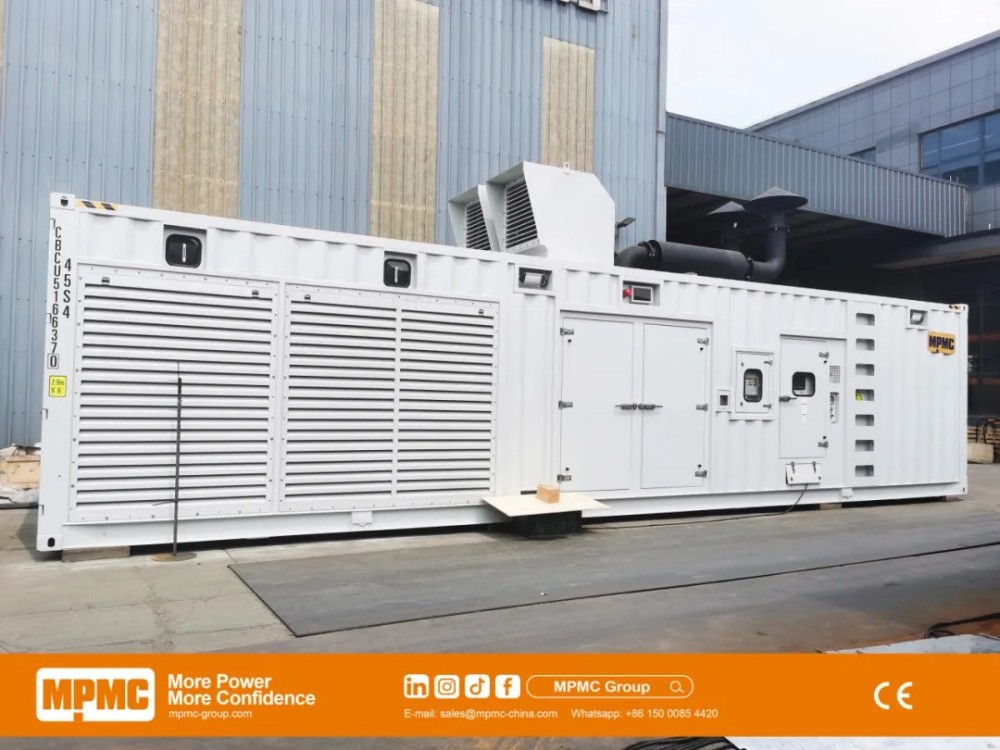
MPMC containerised high-voltage diesel generator set, part of the platform, MPMC pairs natively with HBD-R Series battery storage for fuel-saving hybrid operation.
The Genset Mate Mechanism Behind the Fuel Savings
The HBD-R Series performs peak shaving, transient load absorption, and selective genset shutdown during low-demand periods, letting the generator set run at its optimal fuel-efficiency load point — typically around 75% — while the battery compensates for load fluctuations and motor-start inrush. MPMC documents this integration as reducing fuel consumption by up to 75% compared with diesel-only operation and extending generator overhaul intervals by up to 3x.
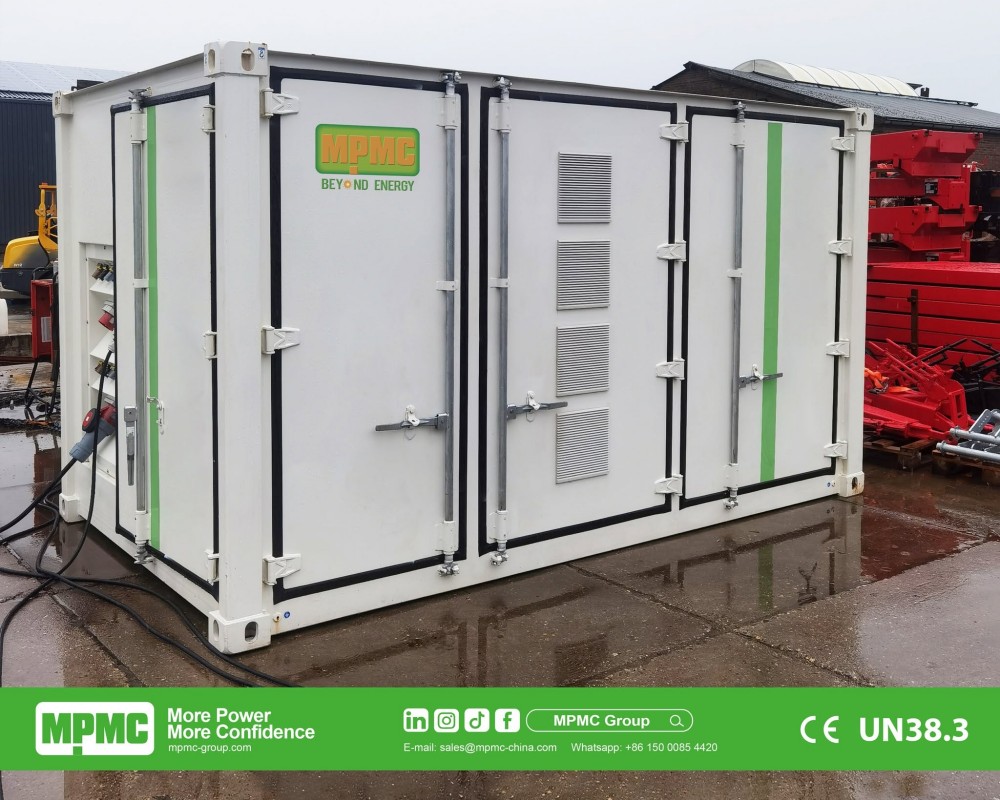
MPMC HBD-R Series battery energy storage system, MPMC’s native genset-integration platform for fuel-saving hybrid operation.
Controller Compatibility Beyond MPMC’s Own Gensets
For a buyer with an existing generator inventory from another manufacturer, the HBD-R Series is compatible with major third-party controller brands including DSE, ComAp, Woodward, DEIF, Smartgen, and CAT EMCP — meaning the native-integration advantage is not limited to new MPMC generator set purchases specifically, and an existing genset installation can be retrofitted with HBD-R storage without necessarily replacing the generator set itself.
Quantified Results at Two Different Scales
MPMC’s UK construction site case documents a 56 kW generator, oversized for a 3–6 kW office base load, extending its refuelling interval from every 2 days to every 7 days after a 30 kW / 60 kWh HBD-30-60 unit was added. At considerably larger industrial scale, MPMC’s Dubai concrete batching plant deployment — ten stations each combining an HBD-500-1000 unit with three 500 kVA gensets — documents 254.13 litres of daily fuel savings per station and a 2–3 year CAPEX payback period. But the HBD-500-1000 used in Dubai belongs to MPMC’s HBD-A Series — its stationary, commercial-and-industrial-grade battery storage line, built for fixed installation rather than repeated redeployment. The two series share MPMC’s underlying LFP cell technology and EMS logic, and the Dubai figures remain a legitimate, fully quantified illustration of how much a genset can benefit from battery pairing at larger, fixed industrial scale.
Deployment
Genset Configuration
Fuel-Saving Result
UK Construction Site
56 kW genset + HBD-30-60 (30 kW/60 kWh)
Refuel interval: 2 days → 7 days
Dubai Concrete Batching Plant
3×500 kVA gensets + HBD-500-1000 per station
254.13 L/day fuel savings; 20% OPEX reduction
Applying the Same Principle at Mining and Off-Grid Scale
The same genset-BESS integration principle scales beyond construction and industrial sites: MPMC applies the identical HBD-R Genset Mate architecture within its mining hybrid energy core and its GSB Series for smaller remote installations, meaning a company evaluating this capability for one application type can reasonably expect the same underlying fuel-saving mechanism to transfer to a different site type within its own operations.
Evaluating a Genset-BESS Integration Partner
• Confirm whether the battery and controller are natively designed for genset integration or rely on third-party compatibility
• Verify controller compatibility with your specific existing generator brand if retrofitting
• Request documented fuel-saving and maintenance-extension figures from a comparable prior deployment
• Size the battery to the gap between your generator’s typical and rated load, not the full rated capacity
• Confirm EMS dispatch logic can be tuned to your site’s specific load profile
• Ask about CAPEX payback period estimates based on your site’s actual fuel cost and consumption
https://www.mpmc-china.com/
MPMC Powertech Corp. -
AuthorPosts

- You must be logged in to reply to this topic.